
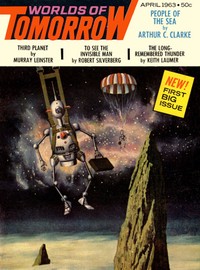
Third Planet
Written by Murray Leinster
Chaptra reads alongside you — AI insights, chapter breakdowns and reader discussions for every book. Join free
About this book
Reading guide
Themes, characters and key ideas in Third Planet, written by Chaptra AI.
- about 8 hours
- intermediate
- Dark
- Tense
- Cautionary
Murray Leinster's "Third Planet" is a cautionary science fiction novel from the early 1960s, set against the backdrop of Earth's escalating Cold War tensions. The narrative follows Nolan, a crew member of the survey ship "Lotus," as they discover a once-thriving alien world now utterly devastated by nuclear conflict. This stark discovery serves as a grim mirror to humanity's own self-destructive path, prompting Nolan to desperately warn Earth's warring factions. The story culminates in a dramatic showdown where political leaders must confront the catastrophic implications of their actions, forcing a choice between global annihilation and a fragile hope for peace.
“We found a world that learned the hard way. A world that died.”
Key themes
- The Dangers of War and Nuclear Annihilation
- This is the central, overarching theme of the novel. It is explored through the stark depiction of the alien planet, which serves as a premonitory vision of Earth's potential future if it succumbs to atomic conflict. The narrative emphasizes the irreversible and absolute destruction that war, particularly nuclear war, can unleash.
- Survival and Humanity's Choice
- The novel posits humanity at a critical crossroads, facing a stark choice between self-preservation through peace and collective obliteration through conflict. It explores the idea that survival is not guaranteed but a deliberate choice that requires overcoming ingrained hostilities and learning from past mistakes.
- The Responsibility of Knowledge and Discovery
- The act of discovering the desolate alien planet places a heavy burden of knowledge and responsibility on Nolan and, by extension, on humanity. It explores the ethical imperative to act upon grim truths, especially when they portend catastrophic consequences.
Worth discussing
How does the alien desolate planet serve as a mirror to Earth's potential future, and what makes this a compelling narrative device?
Chapter-by-chapter breakdowns, character arcs and the full thematic analysis come with a free account.
Discussions
No one has started one yet
Questions this book opens up
No discussions yet
Be the first to start a discussion about this book!
Sign up to start the discussionReviews
No reviews yet
Be the first to review this book!