
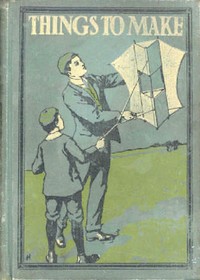
Things To Make
Written by Archibald Williams
Chaptra reads alongside you — AI insights, chapter breakdowns and reader discussions for every book. Join free
About this book
Reading guide
Themes, characters and key ideas in Things To Make, written by Chaptra AI.
- about 8 hours
- beginner
- Instructive
- Encouraging
- Practical
Things To Make" by Archibald Williams is an early 20th-century practical guide designed to inspire young boys and amateur craftsmen in DIY projects. The book emphasizes the educational and rewarding experience of hands-on creation, encouraging readers to build items like toys and simple furniture rather than purchasing them. It begins by outlining the author's intent to foster creativity and manual skills, providing definitions for essential tools and techniques to ensure accessibility. The inaugural project, a sawing trestle, exemplifies the book's detailed, step-by-step instructional approach. Overall, the text sets a tone of encouragement and practicality for exploring craftsmanship, promoting self-reliance and practical learning.
“The pleasure of making things oneself instead of buying them is one that every boy should experience.”
Key themes
- Craftsmanship and Manual Skill
- This theme is central to the entire book, which is dedicated to teaching readers how to develop practical skills in woodworking, mechanics, and general DIY. It emphasizes the value of precision, patience, and the satisfaction derived from creating functional objects with one's own hands. The act of making is presented not just as a hobby but as a fundamental aspect of self-reliance and personal development.
- Self-Reliance and Independence
- The book strongly advocates for individuals to be capable of creating and repairing things for themselves rather than relying solely on purchased goods. This theme promotes a sense of personal agency and resourcefulness, fostering independence from external manufacturers and services. It suggests that the ability to make things empowers individuals and builds confidence.
- Practical Education and Learning by Doing
- The book is fundamentally an educational tool, emphasizing experiential learning. It posits that true understanding and skill development come from direct engagement with materials and processes, rather than purely theoretical instruction. The detailed, sequential projects are designed to build knowledge and proficiency incrementally, proving that practical application is key to mastery.
Worth discussing
In an age of mass production and instant gratification, what is the enduring value of learning to make things by hand?
Chapter-by-chapter breakdowns, character arcs and the full thematic analysis come with a free account.
Discussions
No one has started one yet
Questions this book opens up
No discussions yet
Be the first to start a discussion about this book!
Sign up to start the discussionReviews
No reviews yet
Be the first to review this book!