
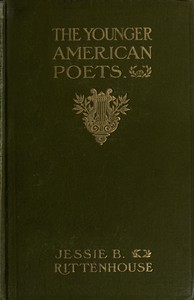
The Younger American Poets
Written by Jessie Belle Rittenhouse
Chaptra reads alongside you — AI insights, chapter breakdowns and reader discussions for every book. Join free
About this book
Reading guide
Themes, characters and key ideas in The Younger American Poets, written by Chaptra AI.
- about 8 hours
- advanced
- Academic
- Analytical
- Informative
Jessie Belle Rittenhouse's "The Younger American Poets" is an early 20th-century collection of literary studies, offering a critical examination of contemporary American poetry. The work meticulously explores the contributions, distinct styles, and thematic elements of a curated selection of emerging poets. Rittenhouse delves into their artistic approaches and the socio-cultural backdrop influencing their creations, providing valuable insight into the evolving landscape of American verse. The collection notably begins with an in-depth analysis of Richard Hovey, characterizing him as a poet of conviction, comradeship, and deep engagement with life's essence, drawing parallels to Walt Whitman while asserting his unique voice. This foundational study sets the stage for a broader exploration of the diverse poetic voices shaping the era.
“N/A - As a work of literary criticism, the book's 'quotes' would primarily be excerpts from the poets it analyzes, rather than Rittenhouse's overarching narrative, which is analytical and descriptive.”
Key themes
- The Evolution of American Poetry
- This theme explores how American poetry was developing and changing in the early 20th century, moving beyond established figures to embrace new voices and styles. Rittenhouse's work itself is a testament to this evolution, documenting the shift and identifying the characteristics of the 'younger' generation of poets who were shaping the future of American verse.
- Individual Artistic Voice vs. Influence
- Rittenhouse delves into how individual poets carve out their unique artistic identities while often operating under the influence of predecessors. This is exemplified in her analysis of Richard Hovey, where she acknowledges his Whitmanesque qualities but ultimately emphasizes his distinct thematic concerns and personal expression, ensuring his originality is recognized.
- The Role of Literary Criticism
- The book itself embodies and demonstrates the vital role of literary criticism in identifying, interpreting, and preserving artistic contributions. Rittenhouse's work showcases how critics contextualize poets, analyze their craft, and contribute to the ongoing discourse that shapes literary history and appreciation. It's a meta-theme, where the book is an example of the theme it implicitly discusses.
Worth discussing
How does Rittenhouse define 'younger American poets' in the context of the early 20th century, and what does this reveal about the period's literary landscape?
Chapter-by-chapter breakdowns, character arcs and the full thematic analysis come with a free account.
Discussions
No one has started one yet
Questions this book opens up
No discussions yet
Be the first to start a discussion about this book!
Sign up to start the discussionReviews
No reviews yet
Be the first to review this book!