
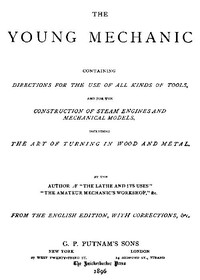
The Young Mechanic: Containing directions for the use of all kinds of tools, and for the construction of steam engines and mechanical models, including the art of turning in wood and metal
Written by James Lukin
Chaptra reads alongside you — AI insights, chapter breakdowns and reader discussions for every book. Join free
About this book
Reading guide
Themes, characters and key ideas in The Young Mechanic: Containing directions for the use of all kinds of tools, and for the construction of steam engines and mechanical models, including the art of turning in wood and metal, written by Chaptra AI.
- about 12 hours
- intermediate
- Instructive
- Empowering
- Practical
James Lukin's "The Young Mechanic" is a late 19th-century practical guidebook designed to instruct young boys in the fundamentals of woodworking and mechanical construction. The book systematically introduces readers to various tools and techniques, progressing from basic projects like building a simple box to more complex endeavors such as constructing steam engines and furniture. Emphasizing hands-on learning and craftsmanship, it aims to foster confidence and competence in aspiring mechanics. Lukin's work reflects a growing Victorian-era interest in practical education, highlighting the educational and recreational value of developing manual skills and a systematic approach to problem-solving.
“Every great mechanic begins with a simple box; patience and precision are the true tools of mastery.”
Key themes
- The Value of Practical Skills and Craftsmanship
- The core theme emphasizing the intrinsic worth of learning to work with one's hands, build, and repair. Lukin champions the development of manual dexterity, precision, and the satisfaction derived from creating tangible objects, positioning these skills as fundamental to personal development and societal contribution.
- Education and Self-Reliance
- This theme explores how practical education empowers individuals to be self-sufficient and capable of independent thought and action. The book promotes a 'learn-by-doing' philosophy, encouraging readers to solve problems, understand mechanisms, and rely on their own skills rather than external dependencies.
- Systematic Learning and Mastery
- Lukin advocates for a structured, step-by-step approach to acquiring complex skills. This theme highlights the importance of patience, precision, and building foundational knowledge before moving to advanced concepts, ultimately leading to mastery through diligent practice.
Worth discussing
How does 'The Young Mechanic' reflect the educational values and societal expectations for youth in the late 19th century?
Chapter-by-chapter breakdowns, character arcs and the full thematic analysis come with a free account.
Discussions
No one has started one yet
Questions this book opens up
No discussions yet
Be the first to start a discussion about this book!
Sign up to start the discussionReviews
No reviews yet
Be the first to review this book!