
About this book
Reading guide
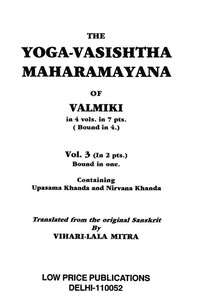
Themes, characters and key ideas in The Yoga-Vasishtha Maharamayana of Valmiki, Vol. 3 (of 4), Part 2 (of 2), written by Chaptra AI.
- about 25 hours
- advanced
- serene
- contemplative
- enlightening
This volume of Valmiki's 'The Yoga-Vasishtha Maharamayana' is a profound ancient Hindu philosophical text, functioning as a spiritual discourse between the sage Vasishtha and Prince Ráma. It delves into core concepts of spiritual liberation, such as Nirvana, the nature of the soul, and the essence of Brahman, through intricate dialogues and teachings. The narrative is framed by Vasishtha addressing an assembly at dusk, creating a serene yet intellectually stimulating atmosphere. The text aims to guide the audience and reader towards understanding ultimate reality and achieving inner peace by transcending desires and ignorance, setting the stage for deeper spiritual revelations.
“True composure arises not from external quietude, but from the transcendence of internal desires and ignorance.”
Key themes
- The Nature of Brahman and the Soul (Atman)
- Central to Hindu philosophy, this theme delves into the ultimate reality (Brahman) and the individual self (Atman). The text asserts their non-dualistic identity, meaning the soul is not separate from Brahman. Understanding this profound connection is presented as the cornerstone of spiritual enlightenment and liberation.
- Nirvana and Ultimate Liberation
- This theme explores the ultimate goal of spiritual practice: transcending the cycle of suffering and achieving a state of lasting peace and freedom. Vasishtha's teachings directly address the methods and philosophical underpinnings required to attain this supreme state, often linked to the cessation of desires and ignorance.
- The Role of Spiritual Discourse and Mentorship
- This theme highlights the crucial role of enlightened teachers (like Vasishtha) and the act of engaging in deep spiritual dialogue as a means of transmitting profound knowledge. The setting of the assembly and the captivating effect of Vasishtha's words underscore the transformative power of direct instruction and shared inquiry.
Worth discussing
How does the text use the setting of 'dusk' to enhance the spiritual and philosophical atmosphere of the discourse?
Chapter-by-chapter breakdowns, character arcs and the full thematic analysis come with a free account.
Discussions
No one has started one yet
Questions this book opens up
No discussions yet
Be the first to start a discussion about this book!
Sign up to start the discussionReviews
No reviews yet
Be the first to review this book!