
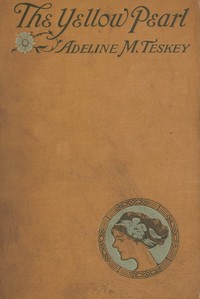
The Yellow Pearl: A Story of the East and the West
Written by Adeline M. (Adeline Margaret) Teskey
Chaptra reads alongside you — AI insights, chapter breakdowns and reader discussions for every book. Join free
About this book
Reading guide
Themes, characters and key ideas in The Yellow Pearl: A Story of the East and the West, written by Chaptra AI.
- about 8 hours
- intermediate
- conflicted
- reflective
- somber
Adeline M. Teskey's "The Yellow Pearl" is an early 20th-century novel chronicling the profound identity struggles of Margaret, a biracial young woman known as Pearl, who is of American and Chinese heritage. Following her father's death, Pearl is uprooted from her Chinese upbringing and sent to live with her American grandmother, where she immediately confronts prejudice and cultural disapproval from her relatives. The narrative meticulously explores her internal conflict as she navigates the stark contrasts between her two cultures, grappling with societal pressures to assimilate while yearning to honor her Chinese roots. This story sets the stage for a poignant journey of self-discovery, cultural reconciliation, and the search for belonging in a world divided by heritage and expectation.
“Was I American, or was I merely a stranger draped in silk and shadow, forever caught between the currents of two worlds?”
Key themes
- Identity and Biracialism
- This is the central theme, exploring Margaret's struggle to define herself as the biracial daughter of American and Chinese parents. The novel delves into the psychological toll of being caught between two distinct cultures, neither of which fully accepts her until she learns to embrace both. It questions what constitutes 'identity' when one's heritage is divided and how individuals forge a sense of self amidst external pressures.
- Cultural Conflict and Assimilation
- The novel vividly portrays the clash between 'Eastern' and 'Western' cultures through Margaret's experience. It examines the societal pressure to assimilate, often at the cost of one's original heritage, and the difficulties inherent in bridging such disparate worlds. This theme explores the practical and emotional struggles of adapting to new customs, values, and social structures while holding onto one's roots.
- Prejudice and Xenophobia
- Teskey exposes the overt and subtle forms of prejudice Margaret encounters due to her Chinese background. This theme highlights how fear or dislike of the 'other' manifests in social interactions, family dynamics, and institutional attitudes. It explores the emotional impact of being judged and marginalized based on one's ethnicity or cultural origins.
Worth discussing
How does Margaret's biracial identity challenge the rigid 'East vs. West' dichotomy prevalent in the early 20th century?
Chapter-by-chapter breakdowns, character arcs and the full thematic analysis come with a free account.
Discussions
No one has started one yet
Questions this book opens up
No discussions yet
Be the first to start a discussion about this book!
Sign up to start the discussionReviews
No reviews yet
Be the first to review this book!