
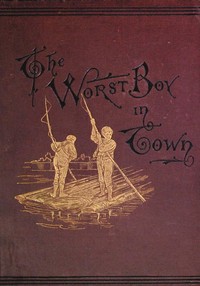
The Worst Boy in Town
Written by John Habberton
Chaptra reads alongside you — AI insights, chapter breakdowns and reader discussions for every book. Join free
About this book
Reading guide
Themes, characters and key ideas in The Worst Boy in Town, written by Chaptra AI.
- about 8 hours
- intermediate
- humorous
- uplifting
- nostalgic
John Habberton's 'The Worst Boy in Town' is a late 19th-century novel chronicling the escapades of Jack Wittingham, a spirited boy renowned for his mischievous antics in a quaint small town. Despite his reputation, Jack embodies a blend of innocent playfulness and a surprising good-heartedness, often engaging in schemes that, while disruptive, spring from a desire for adventure or to help others. The narrative playfully explores the challenges he faces with authority and his own evolving conscience, set against the backdrop of idyllic childhood freedom. It's a charming portrayal of youthful whimsy, the quest for fun, and the subtle lessons learned on the path to maturity.
“"The worst boy in town, eh? Well, I suppose that's a title one earns, not asks for."”
Key themes
- Childhood and Innocence
- The novel deeply explores the nature of childhood, portraying it as a time of boundless energy, imagination, and a unique blend of innocence and burgeoning self-awareness. It romanticizes the freedom and adventures of youth in a small-town setting, where mischief is often a natural expression of vitality rather than malice.
- Mischief vs. Morality
- A central tension in the story is the distinction between Jack's 'mischief' and genuine wrongdoing. The novel constantly blurs these lines, showing that Jack's antics, while disruptive, are often driven by good intentions, a desire for fun, or even altruism (like helping the widow). It explores how a child learns moral boundaries through experience.
- Authority and Rebellion
- The narrative highlights the natural conflict between a child's desire for independence and the authority figures (parents, teachers, town elders) who seek to instill order and discipline. Jack's attempts to evade school and challenge norms represent a universal childhood struggle against imposed rules.
Worth discussing
How does the novel challenge or reinforce the idea of a 'bad boy' in literature?
Chapter-by-chapter breakdowns, character arcs and the full thematic analysis come with a free account.
Discussions
No one has started one yet
Questions this book opens up
No discussions yet
Be the first to start a discussion about this book!
Sign up to start the discussionReviews
No reviews yet
Be the first to review this book!