
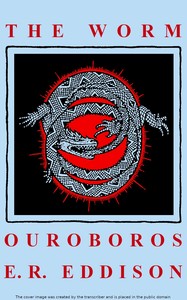
The Worm Ouroboros: A Romance
Written by Eric Rücker Eddison
Chaptra reads alongside you — AI insights, chapter breakdowns and reader discussions for every book. Join free
About this book
Reading guide
Themes, characters and key ideas in The Worm Ouroboros: A Romance, written by Chaptra AI.
- about 25 hours
- advanced
- Epic
- Archaic
- Heroic
E.R. Eddison's "The Worm Ouroboros: A Romance" is a foundational work of epic fantasy, transporting the reader from modern England into the mythical world of Mercury through the eyes of Lessingham. This intricate tale plunges into a millennia-long conflict between the heroic Lords of Demonland and the sorcerous King Gorice of Witchland, driven by ancient grievances and a relentless pursuit of honor and power. Characterized by its archaic prose, vivid imagery, and a grand scale, the novel explores themes of cyclical warfare, the nature of heroism, and the aesthetic beauty of a world defined by its epic struggles. Ultimately, it presents a universe where valor and conflict are ends in themselves, culminating in a poignant reflection on the eternal recurrence of strife.
“"It is an ill thing for a man to be a-weary of his life, when he hath but one to live."”
Key themes
- The Cycle of Conflict / Eternal Recurrence
- Symbolized by the Ouroboros itself, this theme posits that conflict and struggle are not merely temporary evils to be overcome, but fundamental, perhaps even desirable, aspects of existence. The novel's famous ending, where the heroes wish for the return of their enemies and the renewal of war, explicitly articulates this cyclical worldview, suggesting that peace, for true heroes, is a form of stagnation.
- Heroism and Chivalry
- The novel is a profound exploration of an archaic, almost Homeric, ideal of heroism. Characters are defined by their martial prowess, honor, loyalty, and willingness to face death for glory. The Demon Lords embody a code of chivalry that prioritizes noble deeds and courage above all else, even pragmatic outcomes. Their struggles are not just for survival but for the perpetuation of this heroic ideal.
- Aestheticism and Beauty
- Eddison's prose is deeply aesthetic, focusing on the beauty of the language, the vividness of descriptions, and the grandeur of epic events. The characters themselves often appreciate beauty, whether in nature, architecture, or the 'beautiful' execution of a heroic deed. The novel often prioritizes the dramatic and visually striking over simple realism or moral clarity.
Worth discussing
How does Eddison's archaic language contribute to or detract from the reading experience? Is it essential to the novel's unique charm?
Chapter-by-chapter breakdowns, character arcs and the full thematic analysis come with a free account.
Discussions
No one has started one yet
Questions this book opens up
No discussions yet
Be the first to start a discussion about this book!
Sign up to start the discussionReviews
No reviews yet
Be the first to review this book!