
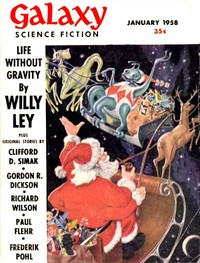
The World That Couldn't Be
Written by Clifford D. Simak
Chaptra reads alongside you — AI insights, chapter breakdowns and reader discussions for every book. Join free
About this book
Reading guide
Themes, characters and key ideas in The World That Couldn't Be, written by Chaptra AI.
- about 8 hours
- intermediate
- mysterious
- perilous
- thought-provoking
Clifford D. Simak's novella, "The World That Couldn't Be," transports readers to the alien planet Layard, where human planter Gavin Duncan faces a desperate struggle to protect his vital 'vua' crops from the elusive and dangerous Cytha. What begins as a perilous hunt for a destructive creature transforms into a profound journey of discovery, challenging Duncan's perceptions of alien life and communication. Accompanied by the native tracker Sipar, Duncan confronts not only the physical threats but also the supernatural aspects of the Cytha, leading to tragic loss and a startling revelation. Ultimately, Duncan learns the Cytha is an intelligent, maternal figure essential to Layard's ecosystem, culminating in a fragile agreement for coexistence that redefines humanity's place on the alien world.
“"On Layard, a man learned quickly that the familiar rules of Earth meant nothing. Here, survival was a negotiation with the impossible."”
Key themes
- Survival and Coexistence
- This theme explores the desperate struggle for survival in an alien environment and the ultimate necessity of finding a way for different species to coexist. Duncan's initial fight for his crops evolves into a broader understanding that human survival on Layard depends on respecting and integrating with the planet's indigenous life, rather than dominating it.
- Human-Alien Communication and Understanding
- The novella delves into the challenges and possibilities of communication between vastly different species. It moves beyond verbal language to explore non-verbal cues, shared experience, and intuitive understanding, highlighting how initial misconceptions can be overcome through empathy and observation.
- Ecological Balance and Responsibility
- Simak explores the delicate balance of an alien ecosystem and humanity's responsibility when interacting with it. The Cytha's role as a maternal figure for Layard's fauna underscores the interconnectedness of all life and the potential harm caused by disrupting natural cycles for human gain.
Worth discussing
How does Simak challenge traditional notions of 'antagonist' and 'protagonist' through the evolving relationship between Duncan and the Cytha?
Chapter-by-chapter breakdowns, character arcs and the full thematic analysis come with a free account.
Discussions
No one has started one yet
Questions this book opens up
No discussions yet
Be the first to start a discussion about this book!
Sign up to start the discussionReviews
No reviews yet
Be the first to review this book!