
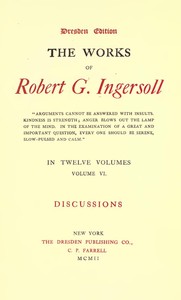
The Works of Robert G. Ingersoll, Vol. 06 (of 12): Dresden Edition—Discussions
Written by Robert Green Ingersoll
Chaptra reads alongside you — AI insights, chapter breakdowns and reader discussions for every book. Join free
About this book
Reading guide
Themes, characters and key ideas in The Works of Robert G. Ingersoll, Vol. 06 (of 12): Dresden Edition—Discussions, written by Chaptra AI.
- about 8 hours
- advanced
- intellectual
- critical
- polemical
The Works of Robert G. Ingersoll, Vol. 06: Dresden Edition—Discussions is a pivotal collection from the late 19th century, showcasing Ingersoll's incisive critiques of traditional Christianity. It systematically challenges religious dogma, particularly doctrines like atonement and eternal punishment, through the lens of logic, historical context, and moral reasoning. Ingersoll argues for a profound societal shift towards skepticism, urging independent thought and questioning the authority of religious institutions. The volume meticulously dissects biblical narratives, highlighting perceived contradictions and "barbarous ethics" within the Old Testament, advocating for intellectual liberty as essential for human progress. Ultimately, it serves as a powerful platform for freethought, advocating for a human-centered morality over divine decree.
“The hands that built the cathedrals were guided by fear, not love.”
Key themes
- Critique of Religious Dogma
- This theme is central, as the entire volume is dedicated to systematically challenging the core tenets of Christianity, including doctrines like original sin, atonement, divine inspiration of the Bible, and eternal damnation. Ingersoll dissects these concepts, exposing what he perceives as their logical inconsistencies and moral failings.
- Reason vs. Faith
- Ingersoll champions human reason and empirical evidence as the sole reliable paths to truth, directly contrasting them with faith, which he views as belief without sufficient evidence, often leading to superstition and intellectual stagnation. He argues for the supremacy of rational inquiry over blind acceptance of religious dogma.
- Moral Philosophy and Biblical Ethics
- Ingersoll critically examines the moral implications of biblical narratives and divine commands, arguing that many Old Testament passages promote ethically reprehensible actions and that traditional Christian doctrines (like eternal hell) are morally repugnant. He advocates for a humanistic morality based on compassion, justice, and societal well-being, rather than divine decree or fear of punishment.
Worth discussing
How does Ingersoll's critique of biblical morality resonate or clash with contemporary ethical standards?
Chapter-by-chapter breakdowns, character arcs and the full thematic analysis come with a free account.
Discussions
No one has started one yet
Questions this book opens up
No discussions yet
Be the first to start a discussion about this book!
Sign up to start the discussionReviews
No reviews yet
Be the first to review this book!