
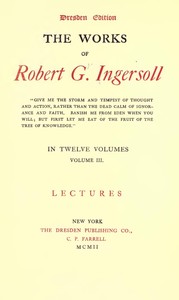
The Works of Robert G. Ingersoll, Vol. 03 (of 12): Dresden Edition—Lectures
Written by Robert Green Ingersoll
Chaptra reads alongside you — AI insights, chapter breakdowns and reader discussions for every book. Join free
About this book
Reading guide
Themes, characters and key ideas in The Works of Robert G. Ingersoll, Vol. 03 (of 12): Dresden Edition—Lectures, written by Chaptra AI.
- about 8 hours
- advanced
- Intellectual
- Inspiring
- Challenging
Volume 03 of Robert G. Ingersoll's 'Dresden Edition—Lectures' offers a profound exploration of human genius and the imperative of intellectual freedom through the lens of figures like Shakespeare, Robert Burns, and Abraham Lincoln. Ingersoll, a celebrated orator of the late 19th century, champions knowledge, art, and humanity, advocating for a societal shift away from restrictive religious dogma and conventional norms. The collection celebrates the capacity for individuals to transcend humble origins and societal limitations, presenting these historical figures as epitomes of universal truth and enduring cultural impact. Ultimately, the volume serves as both a tribute to literary and historical giants and a powerful argument for enlightened humanism.
“In the republic of mind, Shakespeare is king.”
Key themes
- Intellectual Freedom
- Ingersoll passionately argues for the unhindered pursuit of knowledge and truth, free from the constraints of religious dogma, societal pressures, or traditional authority. He posits that true human progress and individual flourishing depend on the liberty to question, explore, and express without fear.
- The Nature of Genius
- The volume deeply explores what constitutes genius, often portraying it as an inherent, almost mystical quality that transcends formal education, social status, or conventional wisdom. Ingersoll uses the lives of Shakespeare, Burns, and Lincoln to illustrate how genius manifests in various forms—artistic, poetic, and leadership—and its profound impact on humanity.
- The Power of Art and Knowledge
- Ingersoll consistently champions art and knowledge as the most potent forces for human elevation and understanding. He views them not just as sources of aesthetic pleasure or information, but as essential tools for empathy, critical thinking, and transcending the mundane or the dogmatic. Art, for Ingersoll, reveals universal truths.
Worth discussing
How does Ingersoll define 'genius,' and how does he apply this definition to figures like Shakespeare, Burns, and Lincoln?
Chapter-by-chapter breakdowns, character arcs and the full thematic analysis come with a free account.
Discussions
No one has started one yet
Questions this book opens up
No discussions yet
Be the first to start a discussion about this book!
Sign up to start the discussionReviews
No reviews yet
Be the first to review this book!