
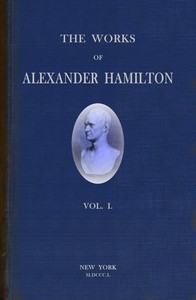
The works of Alexander Hamilton (vol. 1 of 7) : $b comprising his correspondence, and his political and official writings, exclusive of the Federalist, civil and military.
Written by Alexander Hamilton
Chaptra reads alongside you — AI insights, chapter breakdowns and reader discussions for every book. Join free
About this book
Reading guide
Themes, characters and key ideas in The works of Alexander Hamilton (vol. 1 of 7) : $b comprising his correspondence, and his political and official writings, exclusive of the Federalist, civil and military., written by Chaptra AI.
- about 20 hours
- advanced
- historical
- analytical
- formal
This inaugural volume of "The Works of Alexander Hamilton," meticulously edited by his son John C. Hamilton, serves as an indispensable primary source for understanding one of America's most influential founding fathers. Comprising his early correspondence and official writings from 1769 to 1777, it chronicles Hamilton's formative years, his burgeoning ambitions, and his crucial involvement in the American Revolutionary War. The collection vividly portrays the logistical complexities, political intricacies, and personal sacrifices inherent in the struggle for independence, offering a direct window into Hamilton's evolving character and intellectual development. Through these documents, readers gain profound insights into the foundational challenges faced by the nascent United States and Hamilton's pivotal role in shaping its destiny, particularly through his military contributions and keen observations.
“"I have not a doubt that with proper management, the country will be able to sustain the shock and ultimately triumph."”
Key themes
- Ambition and Self-Improvement
- This theme is central to Hamilton's early writings. His letters reveal a relentless drive to rise above his humble origins, to distinguish himself, and to contribute meaningfully to society. His intellectual pursuits, military service, and political observations are all fueled by a profound personal ambition, which he sees as intertwined with the success of the revolutionary cause.
- Nation-Building and Governance
- Even in his early writings, Hamilton demonstrates a sophisticated understanding of the challenges of establishing and governing a new nation. His letters frequently address the structural weaknesses of the Continental Congress, the difficulties of funding a war, and the need for strong, centralized authority. This volume lays the groundwork for his later contributions to American political thought, emphasizing the practicalities of creating a viable republic.
- Military Strategy and Leadership
- As an active participant in the Revolutionary War and an aide to Washington, Hamilton's correspondence offers a ground-level view of military strategy and the complexities of wartime leadership. His letters discuss troop movements, tactical assessments, the importance of discipline, and the psychological aspects of commanding soldiers. He consistently displays a keen analytical mind applied to the practicalities of warfare.
Worth discussing
How do Hamilton's early letters reveal the development of his political and military thought?
Chapter-by-chapter breakdowns, character arcs and the full thematic analysis come with a free account.
Discussions
No one has started one yet
Questions this book opens up
No discussions yet
Be the first to start a discussion about this book!
Sign up to start the discussionReviews
No reviews yet
Be the first to review this book!