
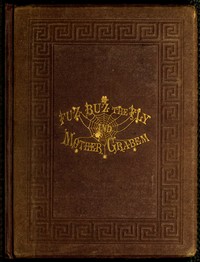
The Wonderful Stories of Fuz-Buz the Fly and Mother Grabem the Spider
Written by S. Weir (Silas Weir) Mitchell
Chaptra reads alongside you — AI insights, chapter breakdowns and reader discussions for every book. Join free
About this book
Reading guide
Themes, characters and key ideas in The Wonderful Stories of Fuz-Buz the Fly and Mother Grabem the Spider, written by Chaptra AI.
- about 8 hours
- intermediate
- whimsical
- humorous
- enchanting
Mitchell's "The Wonderful Stories of Fuz-Buz the Fly and Mother Grabem the Spider" is a charming mid-19th-century collection of children's tales centered around an unlikely friendship. The narrative introduces Mother Grabem, a diligent spider, and her nine curious offspring, who capture a clever fly named Fuz-Buz. Instead of becoming a meal, Fuz-Buz becomes their storyteller, captivating the young spiders with enchanting fables of princes, princesses, and mystical adventures. This whimsical framework allows for the exploration of various moral lessons and imaginative plots, blending humor with educational value. The book skillfully uses anthropomorphic characters to deliver entertaining and thoughtful narratives for its young audience.
“"Every adventure, no matter how small, holds a lesson for those who listen closely."”
Key themes
- The Power of Storytelling
- This theme is central, as Fuz-Buz's ability to tell captivating stories is his means of survival and connection. It highlights how narratives can bridge differences, entertain, educate, and even alter perceptions. The stories within the story serve as powerful tools for communication and influence.
- Morality and Life Lessons
- The book explicitly aims to deliver 'moral lessons' through Fuz-Buz's 'fairy tales and fables.' These lessons likely cover universal virtues such as kindness, bravery, honesty, and the consequences of actions, guiding young readers toward ethical behavior and sound judgment.
- Perspective and Empathy
- The unusual premise of a fly living with spiders forces a consideration of different perspectives. Fuz-Buz, from his captive state, offers stories that broaden the spiders' worldview, and the reader is invited to consider the 'other' in an unexpected light. It fosters empathy by humanizing animal characters.
Worth discussing
How does Fuz-Buz use his cleverness to survive and thrive in an unexpected situation? What lessons can we learn from his adaptability?
Chapter-by-chapter breakdowns, character arcs and the full thematic analysis come with a free account.
Discussions
No one has started one yet
Questions this book opens up
No discussions yet
Be the first to start a discussion about this book!
Sign up to start the discussionReviews
No reviews yet
Be the first to review this book!