
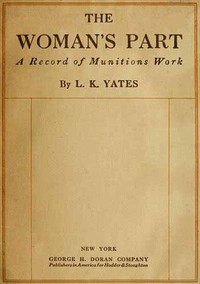
The Woman's Part: A Record of Munitions Work
Written by L. K. Yates
Chaptra reads alongside you — AI insights, chapter breakdowns and reader discussions for every book. Join free
About this book
Reading guide
Themes, characters and key ideas in The Woman's Part: A Record of Munitions Work, written by Chaptra AI.
- about 7 hours
- intermediate
- historical
- observational
- empowering
L. K. Yates's "The Woman's Part: A Record of Munitions Work" offers a crucial firsthand account of British women's contributions to the war effort during World War I. The book meticulously documents the experiences, challenges, and transformations of women who entered munitions factories, a domain previously dominated by men. Through observational narrative, Yates highlights the physical demands, the social shifts, and the profound sense of national service that defined this pivotal period. It serves not only as a historical record of labor but also as a testament to women's changing roles and capabilities in early 20th-century society.
“The call to arms was not only for men; it was a silent summons to the women, bidding them step into the breach in a way unforeseen.”
Key themes
- The Changing Role of Women
- This theme explores how World War I fundamentally altered societal expectations and opportunities for women. The book details women's transition from domestic or traditionally female-dominated roles to heavy industrial labor, showcasing their competence and challenging Victorian-era notions of female fragility and limited capabilities. It highlights the newfound independence, economic power, and public visibility gained by women during this period, laying groundwork for future feminist movements.
- National Service and Sacrifice
- The book emphasizes the pervasive sense of patriotism and duty that motivated women to undertake arduous and dangerous work. It portrays their contributions not just as labor, but as a vital part of the national war effort, equivalent in importance to the men fighting on the front lines. This theme explores the collective spirit of sacrifice for a greater cause and how individuals found purpose within the national crisis.
- Industrialization and Labor Conditions
- This theme delves into the realities of factory work during a period of rapid industrial expansion driven by wartime needs. It details the physical demands, the noise, the grime, the long shifts, and the inherent dangers of working with explosives and heavy machinery. It also touches upon the adaptation of workers to these new environments and the development of new skills, offering a glimpse into early 20th-century industrial labor practices.
Worth discussing
How did the experiences of 'munitionettes' challenge and reshape traditional gender roles in early 20th-century Britain?
Chapter-by-chapter breakdowns, character arcs and the full thematic analysis come with a free account.
Discussions
No one has started one yet
Questions this book opens up
No discussions yet
Be the first to start a discussion about this book!
Sign up to start the discussionReviews
No reviews yet
Be the first to review this book!