
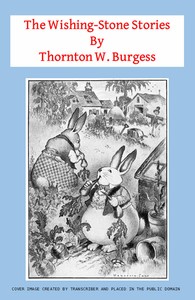
The Wishing-Stone Stories
Written by Thornton W. (Thornton Waldo) Burgess
Chaptra reads alongside you — AI insights, chapter breakdowns and reader discussions for every book. Join free
About this book
Reading guide
Themes, characters and key ideas in The Wishing-Stone Stories, written by Chaptra AI.
- about 8 hours
- beginner
- Whimsical
- Educational
- Nature-focused
Thornton W. Burgess's "The Wishing-Stone Stories" is a charming collection for young readers, centered on a discontented boy named Tommy who discovers a magical wishing-stone. This stone grants him the extraordinary ability to transform into various animals, offering him a unique, first-hand perspective on the natural world. Through these transformations, Tommy experiences the daily lives, challenges, and joys of creatures like a meadow-mouse or a partridge, moving beyond his initial sulkiness and farm-life dissatisfaction. The book skillfully weaves together adventures with important lessons, fostering curiosity, empathy for nature, and an appreciation for different forms of existence. Ultimately, it's a journey of self-discovery and a gentle primer on ecological understanding, wrapped in engaging, accessible narratives.
“Oh, to be a meadow-mouse, free from chores and full of adventure!”
Key themes
- Empathy and Perspective-Taking
- This is the central theme, explored through Tommy's ability to physically transform into various animals. By experiencing life from their vantage points – as a tiny meadow-mouse fearing predators, a busy squirrel gathering nuts, or a bird tending its nest – Tommy gains a profound understanding of their struggles, joys, and daily routines. This direct experience fosters a deep sense of empathy, moving him beyond anthropocentric views to appreciate the intrinsic value of all life.
- Appreciation for Nature and Ecology
- The book serves as an engaging introduction to natural history and ecological principles for young readers. Through Tommy's adventures, Burgess meticulously details the habitats, behaviors, diets, and survival strategies of various animals. It subtly educates about the interconnectedness of ecosystems, the food chain, and the delicate balance of nature, fostering a sense of wonder and respect for the environment.
- Growth and Self-Discovery
- Tommy's journey is fundamentally one of personal growth. He starts as a dissatisfied and somewhat selfish boy, but his experiences as an animal challenge his preconceived notions and expand his understanding of the world. Through these adventures, he sheds his sulkiness, learns to appreciate his own life, and develops a more mature and responsible outlook, discovering a deeper sense of purpose and connection to his surroundings.
Worth discussing
How does seeing the world through an animal's eyes change Tommy's perspective? Can we apply this to our own lives?
Chapter-by-chapter breakdowns, character arcs and the full thematic analysis come with a free account.
Discussions
No one has started one yet
Questions this book opens up
No discussions yet
Be the first to start a discussion about this book!
Sign up to start the discussionReviews
No reviews yet
Be the first to review this book!