
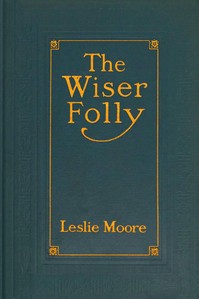
The wiser folly
Written by LM (Leslie Moore)
Chaptra reads alongside you — AI insights, chapter breakdowns and reader discussions for every book. Join free
About this book
Reading guide
Themes, characters and key ideas in The wiser folly, written by Chaptra AI.
- about 8 hours
- intermediate
- contemplative
- mysterious
- social drama
Leslie Moore's "The Wiser Folly" is an early 20th-century novel set in the picturesque village of Malford, where friends John Mortimer and Corin Elmore arrive to explore its rich art and history. Their intellectual pursuits soon entangle them with the local gentry, particularly the Delancey family, whose ancient heritage is jeopardized by a persistent rumor of an American claimant to their estate. The narrative expertly weaves together the scenic beauty of Malford, the complexities of village society, and a compelling mystery, examining themes of tradition versus change and the profound connection individuals have to their past. Through thoughtful conversations and interactions with characters like Lady Mary Delancey and Father Maloney, the story unfolds a nuanced exploration of identity, legacy, and the sometimes-foolish wisdom of holding onto the past.
“"Perhaps the truest wisdom lies in understanding the folly we choose to embrace, for it is often there that our deepest values reside."”
Key themes
- Tradition vs. Change
- This central theme is explored through the Delancey family's struggle to maintain their ancestral estate and name against the threat of an American claimant. It represents the broader societal tension in early 20th-century Britain between preserving established aristocratic traditions and adapting to emerging modern values and claims.
- Heritage and Identity
- The novel delves into what constitutes one's identity, particularly when it is tied to an ancestral name, land, and history. The Delancey family's predicament forces them, and the readers, to consider whether identity is solely defined by birthright or if it can be shaped by actions, values, or even a new claim.
- The Nature of Truth and Rumor
- The central conflict is ignited by a 'rumor' of an American claimant, highlighting how unsubstantiated information can profoundly impact individuals and communities. The narrative explores the power of gossip, the struggle to ascertain facts, and the psychological weight of uncertainty.
Worth discussing
How does the novel define 'folly' and 'wisdom,' and how do these definitions evolve through the characters' experiences?
Chapter-by-chapter breakdowns, character arcs and the full thematic analysis come with a free account.
Discussions
No one has started one yet
Questions this book opens up
No discussions yet
Be the first to start a discussion about this book!
Sign up to start the discussionReviews
No reviews yet
Be the first to review this book!