
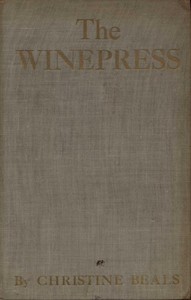
The Winepress
Written by Christine Beals
Chaptra reads alongside you — AI insights, chapter breakdowns and reader discussions for every book. Join free
About this book
Reading guide
Themes, characters and key ideas in The Winepress, written by Chaptra AI.
- about 8 hours
- intermediate
- contemplative
- introspective
- serious
Christine Beals's early 20th-century novel, "The Winepress," delves into the profound internal struggles of Evelyn Thorpe, a minister's wife, as she navigates the complex landscape of faith, identity, and societal expectations. Recently settled into her new parsonage life with her steadfast husband, Reverend Maurice Thorpe, Evelyn finds herself deeply contemplative and troubled, questioning the very essence of happiness and purpose. While Maurice dedicates himself wholeheartedly to his ministry, Evelyn grapples with philosophical and spiritual doubts, often feeling a profound disconnect from her prescribed role. Her journey becomes a poignant exploration of the human quest for understanding amidst emotional turmoil, setting the stage for a rich narrative on the complexities of spiritual and personal truth.
“Illustrative quote: 'The weight of expectation was a winepress, crushing not grapes, but my very soul.'”
Key themes
- Faith and Doubt
- This theme explores Evelyn's profound internal struggle with her religious beliefs and the expectations of her role as a minister's wife. It delves into the nature of genuine faith versus performative piety, and the courage required to question deeply held spiritual tenets. The novel likely contrasts Maurice's unwavering devotion with Evelyn's existential uncertainties.
- Identity and Role
- The novel critically examines how Evelyn's personal identity is shaped, and often stifled, by the societal and religious role of 'the parson's wife.' It explores the conflict between an individual's authentic self and the persona demanded by their position, particularly for women in early 20th-century society. Evelyn's journey is one of attempting to reclaim or define her true self.
- The Quest for Truth and Happiness
- Evelyn's central motivation is her deep yearning for understanding and a true sense of happiness, which she finds elusive within her current circumstances. This theme explores the philosophical questions of what constitutes a meaningful life, where genuine happiness can be found, and the nature of objective versus subjective truth.
Worth discussing
How does Evelyn's internal struggle reflect broader societal expectations for women in the early 20th century, particularly within religious communities?
Chapter-by-chapter breakdowns, character arcs and the full thematic analysis come with a free account.
Discussions
No one has started one yet
Questions this book opens up
No discussions yet
Be the first to start a discussion about this book!
Sign up to start the discussionReviews
No reviews yet
Be the first to review this book!