
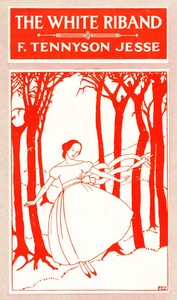
The White Riband; Or, A Young Female's Folly
Written by F. Tennyson (Fryniwyd Tennyson) Jesse
Chaptra reads alongside you — AI insights, chapter breakdowns and reader discussions for every book. Join free
About this book
Read it with a club
Small groups reading the same books and talking as they go.


News
- 1 member
- 1,813 discussions
- Active 1d ago
Read The White Riband; Or, A Young Female's Folly alongside people who are reading it too.
Also here: News Bulletin, Just Joking....
Chaptra Prime — paid clubs, every club feature, and unlimited reading support, for $5 a month or $60 once.
See PrimeReading guide
Themes, characters and key ideas in The White Riband; Or, A Young Female's Folly, written by Chaptra AI.
- about 8 hours
- intermediate
- melancholy
- social commentary
- ambitious
F. Tennyson Jesse's "The White Riband; Or, A Young Female's Folly" is an early 20th-century novel set in rural England, chronicling the struggles of Loveday Strick, a village girl of enigmatic origins. Ostracized by society, Loveday yearns for acceptance and beauty, symbolized by a white satin riband that would allow her to participate in the prestigious Flora Day dance alongside the gentry. The narrative meticulously explores themes of class distinction, ambition, and the transformative power of desire, as Loveday navigates a world that judges her harshly. Her growing obsession with achieving status and emulating figures like the local heiress, Miss Flora Le Pettit, sets the stage for a poignant exploration of self-worth and the often-harsh realities of societal aspirations. Ultimately, the novel delves into the internal and external conflicts that challenge Loveday's sense of self and belonging, hinting at the tragic consequences of her relentless pursuit of an unattainable ideal.
“"The white riband was not merely cloth and silk; it was the whispered promise of belonging, a breath of beauty in a life starved of it."”
Key themes
- Class Distinction and Social Mobility
- This theme is central to the novel, exploring the rigid social hierarchy of early 20th-century rural England and the almost insurmountable barriers to social mobility. Loveday's low parentage and outcast status define her existence, and her ambition for the white riband directly challenges these distinctions, highlighting the arbitrary nature of inherited privilege versus individual merit. The novel meticulously details how class dictates opportunities, perceptions, and even a person's sense of self-worth.
- Ambition and Desire
- The novel deeply explores the nature of ambition and desire, particularly as they manifest in Loveday Strick. Her yearning for the white riband is not just a superficial wish but a profound psychological need for transformation and acceptance. The theme questions the morality and consequences of ambition when one is born into disadvantage, and whether such desires are inherently 'folly' or a fundamental human drive for self-improvement and recognition. It delves into the obsessive quality of desire when unfulfilled.
- Societal Judgment and Ostracism
- The novel vividly portrays the harsh realities of living as an outcast in a small, close-knit community. Loveday's 'mysterious parentage' and low status immediately subject her to the relentless judgment, gossip, and ostracism of the townspeople. This theme explores the psychological toll of being perpetually judged, the mechanisms by which communities enforce social norms, and the difficulty of breaking free from predefined roles and reputations, regardless of individual merit or effort.
Worth discussing
How does the white riband function as a symbol throughout the novel, and what different meanings does it acquire for Loveday and the community?
Chapter-by-chapter breakdowns, character arcs and the full thematic analysis come with a free account.
Discussions
No one has started one yet
Questions this book opens up
No discussions yet
Be the first to start a discussion about this book!
Sign up to start the discussionReviews
No reviews yet
Be the first to review this book!