
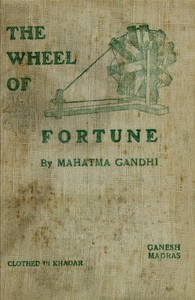
The Wheel of Fortune
Written by Mahatma Gandhi
Not rated yet — tap a star to review it
Chaptra reads alongside you — AI insights, chapter breakdowns and reader discussions for every book. Join free
About this book
"The Wheel of Fortune" by Mahatma Gandhi is a philosophical treatise written in the early 20th century. The book focuses on Gandhi's advocacy for Indian self-sufficiency through the revival of traditional handicrafts, particularly hand-spinning and weaving, as a means to combat poverty and promote economic independence. It emphasizes simplicity and self-sacrifice as vital components of India's struggle for self-rule (Swaraj). The opening of the text introduces the reader to Gandhi's vision of a new era, where societal values shift towards simplicity and self-reliance, as a reaction to the failures of modern industrial civilization. Gandhi reflects on the necessity of adopting the spinning wheel as a critical tool for empowerment, economic resilience, and national solidarity. He argues that engaging in hand-spinning not only helps alleviate poverty but also connects individuals to their cultural roots. The text serves as a call to action for all Indians, inviting them to participate in the Swadeshi movement by embracing traditional methods of production to foster both personal and national regeneration.
Reading guide
Themes, characters and key ideas in The Wheel of Fortune, written by Chaptra AI.
A reading guide for this book hasn't been written yet. Chaptra builds one the first time a reader opens it.
Chapter-by-chapter breakdowns, character arcs and the full thematic analysis come with a free account.
Discussions
No one has started one yet
No discussions yet
Be the first to start a discussion about this book!
Sign up to start the discussionReviews
No reviews yet
Be the first to review this book!