
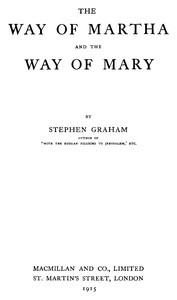
The Way of Martha and the Way of Mary
Written by Stephen Graham
Chaptra reads alongside you — AI insights, chapter breakdowns and reader discussions for every book. Join free
About this book
Reading guide
Themes, characters and key ideas in The Way of Martha and the Way of Mary, written by Chaptra AI.
- about 12 hours
- advanced
- reflective
- philosophical
- spiritual
Stephen Graham's "The Way of Martha and the Way of Mary" is a profound early 20th-century exploration of Russian cultural and religious identity, set against a backdrop of political flux. The book critically examines the essence of Eastern Christianity, contrasting it with Western practices through the allegorical figures of Martha, representing active service, and Mary, embodying contemplative faith. Graham's reflective journey through Russia serves as a vehicle for a deeply personal and intellectual quest to understand how these seemingly divergent paths converge within broader Christian principles. He masterfully intertwines philosophical and theological discourse with vivid travel impressions, creating a rich tapestry that illuminates Russia's deeply rooted spiritual ideals and national character. Ultimately, the work seeks to reconcile action and contemplation as indispensable facets of a holistic faith, offering timeless insights into spirituality and identity.
“"The Way of Martha is the way of service, of outward doing; the Way of Mary is the way of contemplation, of inward being. Russia, perhaps more than any other nation, has sought to reconcile these two eternal paths."”
Key themes
- The Way of Martha vs. The Way of Mary (Action vs. Contemplation)
- This is the central organizing theme of the book. Graham uses the biblical figures to explore the fundamental tension and necessary balance between active engagement with the world (Martha) and introspective spiritual devotion (Mary). He argues that both are essential for a complete faith and seeks to understand how different cultures, particularly Russia, prioritize or reconcile these paths.
- Russian Identity and Spirituality
- Graham delves deep into what constitutes the 'Russian soul' or national character, arguing that it is inextricably linked to its Orthodox Christian faith. He explores unique aspects of Russian spirituality, such as its emphasis on suffering, patience, *sobornost* (spiritual community), and a profound sense of divine mystery, contrasting it with Western individualism and rationalism.
- Eastern vs. Western Christianity
- A significant portion of the book is dedicated to an interpretive survey contrasting the theological and practical differences between Eastern Orthodox and Western (primarily Protestant and Catholic) Christianity. Graham highlights the emphasis on dogma, tradition, mysticism, and theosis in the East versus the Western focus on reason, law, individualism, and moral reform.
Worth discussing
How does Graham use the biblical figures of Martha and Mary to illuminate the differences between Eastern and Western Christianity? Are these distinctions still relevant today?
Chapter-by-chapter breakdowns, character arcs and the full thematic analysis come with a free account.
Discussions
No one has started one yet
Questions this book opens up
No discussions yet
Be the first to start a discussion about this book!
Sign up to start the discussionReviews
No reviews yet
Be the first to review this book!