
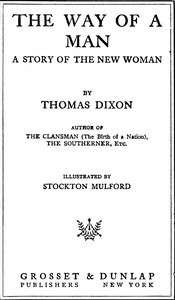
The way of a man : $b a story of the new woman
Written by Thomas Dixon
Chaptra reads alongside you — AI insights, chapter breakdowns and reader discussions for every book. Join free
About this book
This work by Dixon, Thomas, Jr. offers readers a unique literary experience. The narrative explores themes of man-woman relationships and new york (n.y.).
Reading guide
Themes, characters and key ideas in The way of a man : $b a story of the new woman, written by Chaptra AI.
- about 6 hours
- intermediate
- didactic
- polemical
- traditionalist
Thomas Dixon Jr.'s 'The Way of a Man: A Story of the New Woman' is a didactic novel from the early 20th century that directly confronts the emerging feminist movement and the concept of the 'New Woman.' The story centers on Eleanor Worth, an ambitious, intellectual lawyer who initially scorns traditional marriage and domesticity in favor of a career, and Frank Baring, a staunchly traditional Southern gentleman who believes in the inherent, God-given roles of men and women. Through their intense debates and a series of dramatic events, the novel chronicles Eleanor's journey from independent ambition to her eventual embrace of love, marriage, and motherhood, aligning with Frank's patriarchal ideals. It serves as a polemic against women's suffrage and professional aspirations, advocating for a return to perceived traditional gender roles.
“"The way of a man is to fight for his home and his country. The way of a woman is to make that home worth fighting for."”
Key themes
- Traditional Gender Roles vs. The 'New Woman'
- This is the central theme, exploring the clash between early 20th-century feminist ideals (the 'New Woman' seeking independence, career, and suffrage) and deeply entrenched patriarchal views that confine women to domesticity and subordinate roles. Dixon explicitly argues for the latter, portraying female ambition outside the home as misguided and ultimately unfulfilling.
- The Sanctity of Marriage and Family
- Dixon elevates marriage and the nuclear family unit to an almost sacred status, presenting them as the ultimate foundation of society and the only true source of fulfillment for women. He argues that pursuing a career or individual ambition at the expense of marriage and family leads to emptiness and societal decay.
- Patriarchy and Male Authority
- The novel champions a strong patriarchal structure, where men are inherently superior leaders, protectors, and decision-makers, and women are meant to be supportive, nurturing, and submissive. Frank Baring embodies this ideal, and his authority is consistently validated by the narrative.
Worth discussing
How does Dixon portray the 'New Woman,' and what specific fears or anxieties about female independence does he articulate?
Chapter-by-chapter breakdowns, character arcs and the full thematic analysis come with a free account.
Discussions
No one has started one yet
Questions this book opens up
No discussions yet
Be the first to start a discussion about this book!
Sign up to start the discussionReviews
No reviews yet
Be the first to review this book!