
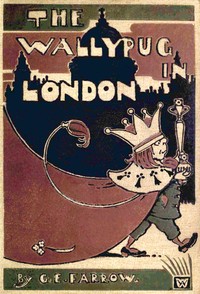
The Wallypug in London
Written by G. E. (George Edward) Farrow
Chaptra reads alongside you — AI insights, chapter breakdowns and reader discussions for every book. Join free
About this book
Reading guide
Themes, characters and key ideas in The Wallypug in London, written by Chaptra AI.
- about 4 hours
- beginner
- humorous
- whimsical
- lighthearted
G. E. Farrow's "The Wallypug in London" is a delightful late 19th-century children's novel chronicling the whimsical misadventures of the titular Wallypug, a king from the fantastical land of Why, and his peculiar entourage as they visit London for the Jubilee celebrations. Naive to the customs of the human world, the Wallypug, accompanied by the Doctor-in-Law, A. Fish, Esq., and the Jubilee Rhymester, creates a series of humorous misunderstandings and charming interactions with the city's inhabitants and institutions. The narrative expertly blends fantasy with reality, using the clash of cultures to explore themes of innocence, wonder, and the absurdity of everyday life. Ultimately, it's a lighthearted adventure that celebrates imagination and gentle humor.
“"In Why, you see, things are quite different. A fact is a fact, and a fancy is a fancy, and never the twain shall meet unless they decide to have tea."”
Key themes
- Innocence vs. Experience
- This theme is central to the novel, explored through the Wallypug and his companions' complete lack of understanding of human customs and societal norms. Their innocent perspective allows them to see the familiar world with fresh eyes, often exposing the inherent absurdities or illogical aspects of everyday life that experienced humans take for granted. The humor arises from this clash, suggesting that sometimes, a naive view can offer profound, if unintended, insights.
- Fantasy vs. Reality
- The core of the book's premise is the delightful collision of a fantastical world (Why) with the very real, bustling environment of late 19th-century London. This theme explores how these two disparate realms interact, creating both humor and moments of wonder. It questions the boundaries of imagination and reality, suggesting that the fantastical can exist, if only briefly, within the mundane, and that reality itself can be quite strange when viewed from an outside perspective.
- Humor and Absurdity
- Farrow's novel is fundamentally a work of humor, relying heavily on situational comedy, wordplay, and the inherent absurdity of its premise. The humor stems from the characters' misunderstandings, their peculiar logic, and the delightful incongruity of their actions within a rigid Victorian setting. This theme celebrates the joy of nonsense and the ability of laughter to bridge cultural divides and highlight the lighter side of life's complexities.
Worth discussing
How does the Wallypug's naive perspective highlight the absurdities or unique aspects of everyday London life?
Chapter-by-chapter breakdowns, character arcs and the full thematic analysis come with a free account.
Discussions
No one has started one yet
Questions this book opens up
No discussions yet
Be the first to start a discussion about this book!
Sign up to start the discussionReviews
No reviews yet
Be the first to review this book!