
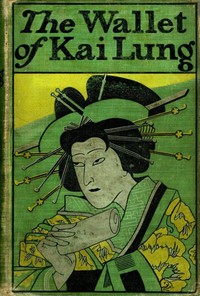
The Wallet of Kai Lung
Written by Ernest Bramah
Chaptra reads alongside you — AI insights, chapter breakdowns and reader discussions for every book. Join free
About this book
Reading guide
Themes, characters and key ideas in The Wallet of Kai Lung, written by Chaptra AI.
- about 10 hours
- advanced
- humorous
- whimsical
- satirical
Ernest Bramah's "The Wallet of Kai Lung" is a collection of whimsical and satirical tales set in an imagined Imperial China, centered around the titular character, a quick-witted and eloquent storyteller. Kai Lung frequently finds himself in perilous situations, often captured by brigands or entangled with powerful officials, from which he skillfully extricates himself by captivating his captors with his elaborate narratives. The book masterfully blends humor with sharp social commentary, using an ornate, pseudo-Orientalist prose style to create a unique literary experience. Through Kai Lung's misadventures and the stories he tells, Bramah explores themes of wit over force, the power of narrative, and the absurdities of human nature and society.
“It is a regrettable truth that the most efficacious method of impressing a moral precept upon the mind of another is not by the employment of unimpeachable logic, but by the judicious exercise of the imagination.”
Key themes
- The Power of Storytelling
- This is the central and most pervasive theme. Kai Lung's ability to tell captivating stories is not merely an art form but a vital tool for survival. His narratives deflect danger, appease captors, influence decisions, and ultimately allow him to navigate a treacherous world. The book consistently demonstrates how words, wit, and imagination can triumph over brute force, authority, and even fate.
- Wit and Ingenuity vs. Brute Force
- The novel consistently pits Kai Lung's intellectual and verbal dexterity against the physical power, authority, and often dim-wittedness of his adversaries. It champions the idea that cleverness, resourcefulness, and a sharp mind are more effective tools for navigating life's challenges than mere strength or rigid adherence to power structures. This theme is often delivered with humorous irony.
- Social Satire and Hypocrisy
- Bramah uses the exoticized setting of Imperial China as a vehicle for satirizing universal human follies and societal absurdities. Through Kai Lung's observations and the moralistic (though often ironically so) tales he tells, the book exposes the vanity of officials, the greed of merchants, the arbitrary nature of justice, and the general hypocrisy that permeates hierarchical societies. The humor often derives from the gap between characters' self-perception and their actual behavior.
Worth discussing
How does Bramah use the 'Orientalist' setting of Imperial China to achieve his satirical effects? Is this approach problematic from a modern perspective?
Chapter-by-chapter breakdowns, character arcs and the full thematic analysis come with a free account.
Discussions
No one has started one yet
Questions this book opens up
No discussions yet
Be the first to start a discussion about this book!
Sign up to start the discussionReviews
No reviews yet
Be the first to review this book!