
Chaptra
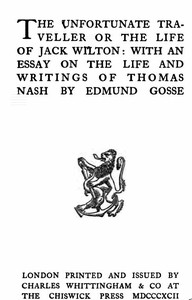
Cover of The Vnfortunate Traveller, or The Life of Jack Wilton: With an Essay on the Life and Writings of Thomas Nash by Edmund Gosse

The Vnfortunate Traveller, or The Life of Jack Wilton: With an Essay on the Life and Writings of Thomas Nash by Edmund Gosse

Written by Thomas Nash

Not rated yet — tap a star to review it

Chaptra reads alongside you — AI insights, chapter breakdowns and reader discussions for every book. Join free

About this book

"The Unfortunate Traveller, or The Life of Jack Wilton" by Thomas Nash is a novel written in the late 16th century. This work is noted for being an early example of the picaresque novel in English literature, following the adventures of its main character, Jack Wilton. Set against the backdrop of historical events such as the reign of Henry VIII and the siege of Tournai, the narrative explores themes of social mobility, identity, and the absurdities of life. At the start of the story, we are introduced to Jack Wilton, a page in the royal camp during the campaign against Tournai. The opening portion of the book reflects his humorous and satirical perspective on his surroundings, filled with witty observations about the hierarchical structure of the court and the camp. Jack's character is depicted as clever and resourceful, navigating the complications of his societal status while engaging in various exploits, including a comical encounter with a fraudulent innkeeper. These initial anecdotes hint at Jack's journey through both the camp and the court, promising a tale of misadventure and wit as he contends with the absurdities of the world around him.

Reading guide

Themes, characters and key ideas in The Vnfortunate Traveller, or The Life of Jack Wilton: With an Essay on the Life and Writings of Thomas Nash by Edmund Gosse, written by Chaptra AI.

  • about 8 hours
  • advanced
  • humorous
  • satirical
  • dark

Thomas Nash's "The Vnfortunate Traveller, or The Life of Jack Wilton" is a groundbreaking late 16th-century picaresque novel, chronicling the episodic adventures of its witty and resourceful protagonist, Jack Wilton. Beginning as a page in Henry VIII's court, Jack embarks on a journey across Europe, encountering historical figures and participating in various schemes and misadventures. The narrative evolves from lighthearted satire and humor to a darker, more violent exploration of human cruelty and moral corruption, particularly in its Italian segment. Nash's work is celebrated for its vibrant prose, social commentary, and pioneering role in the development of the English novel, offering a unique blend of historical detail and fantastical escapism.

I am a king of myself, and my thoughts are my subjects.

Key themes

Satire and Social Critique
Nash employs sharp, often biting satire to critique various aspects of society, including academic pedantry, religious hypocrisy, courtly corruption, and the perceived moral decay of continental Europe. Jack's witty observations and pranks serve as vehicles for Nash's commentary on human folly and institutional shortcomings, making the novel a significant work of social commentary.
Social Mobility and Identity
The novel constantly explores the fluidity of social status and personal identity through Jack's various disguises and manipulations. Jack, a mere page, interacts with kings, scholars, courtesans, and criminals, often by adopting new personas or exploiting social hierarchies. This theme highlights the artificiality of social constructs and the possibility (or impossibility) of moving between different strata of society in Elizabethan and Renaissance Europe.
Violence and Moral Corruption
While beginning with lighthearted humor, the novel takes a dramatic turn towards graphic violence and moral depravity, especially in its Italian segment. This theme explores the darkest aspects of human nature, including torture, murder, sexual exploitation, and the pursuit of brutal revenge. It forces the reader to confront the extreme cruelty of the world and the fragility of morality.

Worth discussing

How does Nash use the picaresque form to comment on society and human nature?

Chapter-by-chapter breakdowns, character arcs and the full thematic analysis come with a free account.

Discussions

No one has started one yet

Join

Questions this book opens up

No discussions yet

Be the first to start a discussion about this book!

Sign up to start the discussion

Reviews

No reviews yet

Be the first to review this book!