
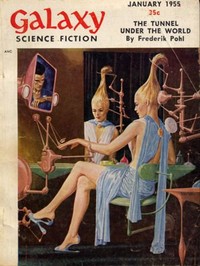
The Vilbar Party
Written by Evelyn E. Smith
Chaptra reads alongside you — AI insights, chapter breakdowns and reader discussions for every book. Join free
About this book
Reading guide
Themes, characters and key ideas in The Vilbar Party, written by Chaptra AI.
- about 8 hours
- intermediate
- humorous
- uplifting
- whimsical
Evelyn E. Smith's mid-20th century science fiction novel, "The Vilbar Party," introduces Narli Gzann, a reserved Saturnian professor who becomes the first of his kind to teach on Earth. His expectations of academic respect are immediately challenged by humans who find him 'adorable,' leading to a series of cross-cultural misunderstandings. Initially burdened by his introversion and desire for solitude, Narli struggles with the overwhelming eagerness and affectionate chaos of human social interactions. Through his experiences in classrooms and at parties, he gradually learns to navigate and ultimately embrace this unexpected warmth. The novel culminates in Narli's personal transformation, as he redefines his tenure on Earth and finds enjoyment in the social connections he has cultivated.
“I came to Earth to teach, not to be perceived as a particularly well-dressed, if somewhat awkward, pet.”
Key themes
- Social Acceptance and Belonging
- The novel deeply explores Narli's journey from being an outsider, an object of curiosity, to finding a sense of belonging and acceptance among humans. It examines the nuances of how individuals, particularly those from different cultures or species, navigate the desire to be understood and integrated versus being merely tolerated or fetishized.
- Cross-Cultural Communication and Misunderstanding
- The humorous and poignant core of the novel lies in the communication gaps and cultural clashes between Narli's Saturnian reserve and human exuberance. It highlights how intentions can be misconstrued, gestures misinterpreted, and how genuine connection requires patience, empathy, and a willingness to bridge vast differences.
- Personal Identity vs. External Perception
- A central conflict in the novel arises from the stark contrast between Narli's self-perception as a serious, introverted academic and his external perception by humans as an 'adorable' alien. The story examines how these differing views impact his sense of self, his mission, and his emotional well-being, ultimately leading him to reconcile these two aspects.
Worth discussing
How does Narli's initial perception of humans as 'overwhelming' and 'adorable' reflect our own biases when encountering the unfamiliar?
Chapter-by-chapter breakdowns, character arcs and the full thematic analysis come with a free account.
Discussions
No one has started one yet
Questions this book opens up
No discussions yet
Be the first to start a discussion about this book!
Sign up to start the discussionReviews
No reviews yet
Be the first to review this book!