
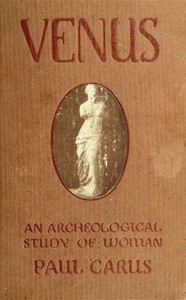
The Venus of Milo: an archeological study of the goddess of womanhood
Written by Paul Carus
Chaptra reads alongside you — AI insights, chapter breakdowns and reader discussions for every book. Join free
About this book
Reading guide
Themes, characters and key ideas in The Venus of Milo: an archeological study of the goddess of womanhood, written by Chaptra AI.
- about 10 hours
- advanced
- scholarly
- historical
- analytical
Paul Carus's "The Venus of Milo: An Archeological Study of the Goddess of Womanhood" offers a comprehensive scholarly examination of the iconic ancient statue. The book meticulously traces the statue's discovery in 1820 on Melos, detailing the complex negotiations and competing claims that led to its acquisition by France for the Louvre. Beyond its fascinating origin story, Carus delves into the statue's historical journey, exploring the various artistic interpretations and proposed restorations over time. The work ultimately transcends a mere historical account, providing profound insights into the cultural and artistic significance of Aphrodite, exploring enduring themes of beauty, femininity, and the impact of religious and societal changes on the statue's legacy as a representation of womanhood.
“The Venus of Milo stands as an eternal enigma, a testament to beauty both found and lost, continually inviting new interpretations of its silent grace.”
Key themes
- The Nature of Beauty and Aesthetic Ideal
- The book deeply explores how the Venus of Milo embodies and influences perceptions of idealized beauty. Carus examines the statue's proportions, form, and enigmatic expression to understand why it has been universally acclaimed as a masterpiece and a pinnacle of aesthetic achievement. This theme delves into the timeless and evolving standards of beauty, and how classical art shaped these ideals.
- Cultural Patrimony and Ownership
- This theme scrutinizes the complex and often contentious issues surrounding the ownership and acquisition of ancient artifacts. The book details the struggle between local Greek interests and French authorities for the Venus of Milo, raising questions about who has the rightful claim to cultural treasures unearthed on foreign soil. It touches upon nascent ideas of national heritage versus the universal appeal of art.
- The Goddess Aphrodite and Feminine Archetypes
- Beyond a mere historical artifact, the book delves into the Venus of Milo as a powerful representation of the goddess Aphrodite and, by extension, broader feminine archetypes. Carus explores the cultural significance of Aphrodite in ancient Greece, her attributes, and how the statue embodies ideals of womanhood, sensuality, and divine beauty. This theme connects the artwork to its mythological and religious roots.
Worth discussing
Discuss the ethical implications of the Venus of Milo's acquisition by France. To whom does cultural heritage truly belong?
Chapter-by-chapter breakdowns, character arcs and the full thematic analysis come with a free account.
Discussions
No one has started one yet
Questions this book opens up
No discussions yet
Be the first to start a discussion about this book!
Sign up to start the discussionReviews
No reviews yet
Be the first to review this book!