
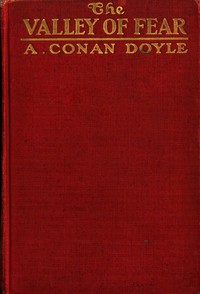
The Valley of Fear
Written by Arthur Conan Doyle
Chaptra reads alongside you — AI insights, chapter breakdowns and reader discussions for every book. Join free
About this book
Reading guide
Themes, characters and key ideas in The Valley of Fear, written by Chaptra AI.
- about 8 hours
- intermediate
- mysterious
- suspenseful
- dark
Sir Arthur Conan Doyle's "The Valley of Fear" presents a complex Sherlock Holmes mystery, uniquely structured in two distinct parts. The initial section sees Holmes and Watson investigating the perplexing murder of John Douglas at Birlstone Manor, uncovering a web of secrets and a past life. The second, extended part delves into the victim's earlier life as Birdy Edwards, an undercover detective infiltrating a violent secret society, the 'Scowrers,' in a remote American mining town. This dual narrative expertly interweaves a classic English country house mystery with a vivid, brutal tale of justice, revenge, and betrayal from the American frontier. Ultimately, the novel explores how the sins and struggles of the past inevitably catch up with individuals, even across continents and years.
“"Data! Data! Data! I can't make bricks without clay."”
Key themes
- The Past Haunting the Present
- This is arguably the central theme of the novel. John Douglas's entire life in England is overshadowed by his past as Birdy Edwards in America. Despite his efforts to create a new identity and a peaceful existence, the enemies he made and the actions he took inevitably catch up with him, culminating in his murder. The narrative structure itself reinforces this, with the past (Part II) directly explaining and leading to the present (Part I).
- Justice vs. Revenge
- The novel deeply explores the blurred lines between seeking justice and enacting revenge. Birdy Edwards's mission in Vermissa Valley is initially presented as justice against the corrupt Scowrers, but the brutal methods employed by both sides raise questions about the nature of true justice. The subsequent pursuit of Douglas by the surviving Scowrers exemplifies pure, relentless revenge, highlighting its destructive and inescapable nature.
- Identity and Disguise
- The novel explores how individuals construct and conceal identities. Birdy Edwards adopts the persona of Jack McMurdo to infiltrate the Scowrers, living a dangerous double life. Later, he becomes John Douglas, attempting to shed his past entirely. The narrative highlights the psychological strain of maintaining such disguises and the difficulty of truly escaping a former self, especially when one's survival depends on it.
Worth discussing
Discuss the effectiveness of Doyle's two-part narrative structure. Does the American flashback enhance or detract from the overall mystery?
Chapter-by-chapter breakdowns, character arcs and the full thematic analysis come with a free account.
Discussions
No one has started one yet
Questions this book opens up
No discussions yet
Be the first to start a discussion about this book!
Sign up to start the discussionReviews
No reviews yet
Be the first to review this book!