
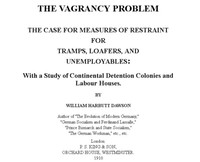
The Vagrancy Problem.: The Case for Measures of Restraint for Tramps, Loafers, and Unemployables: With a Study of Continental Detention Colonies and Labour Houses
Written by William Harbutt Dawson
Chaptra reads alongside you — AI insights, chapter breakdowns and reader discussions for every book. Join free
About this book
Reading guide
Themes, characters and key ideas in The Vagrancy Problem.: The Case for Measures of Restraint for Tramps, Loafers, and Unemployables: With a Study of Continental Detention Colonies and Labour Houses, written by Chaptra AI.
- about 8 hours
- advanced
- didactic
- authoritative
- analytical
William Harbutt Dawson's "The Vagrancy Problem" is an early 20th-century sociological treatise advocating for stringent legislative measures to control vagrancy in England. Drawing upon his experience as a Poor Law Guardian, Dawson critiques the existing Poor Law system for fostering dependency and indulgence towards idleness. He categorizes different types of 'loafers' and argues for a systematic, disciplinary approach, contrasting England's methods with continental detention colonies and labor houses. The work essentially makes a case for state intervention and stricter social control to manage what Dawson perceives as a growing societal burden, emphasizing the protection of society and the promotion of work ethic.
“The present system of dealing with the vagrant is a complete failure; it fosters idleness and encourages dependency.”
Key themes
- Social Control and Discipline
- This is the central theme, arguing for the necessity of state intervention and disciplinary measures to manage and 'correct' the behavior of vagrants. Dawson advocates for a shift from a largely indulgent system to one that enforces labor and restricts the freedom of those deemed unwilling to contribute. The continental detention colonies serve as prime examples of this theme in practice.
- The Value and Integrity of Labor
- Dawson's treatise is deeply rooted in the Protestant work ethic, emphasizing labor as a moral imperative and a cornerstone of societal contribution. He views idleness not merely as an economic inefficiency but as a moral failing that undermines the integrity of the community and the efforts of hardworking citizens. The book implicitly argues that those who refuse to work forfeit certain societal privileges.
- Poverty as a Moral Failing vs. Systemic Issue
- While not explicitly denying external factors, Dawson's primary focus leans heavily towards interpreting vagrancy and unemployment as a result of individual moral deficiencies and choices (e.g., idleness, lack of discipline) rather than systemic economic or social inequalities. This perspective informs his advocacy for punitive and corrective measures rather than structural reforms.
Worth discussing
How does Dawson's definition of 'vagrant' compare with contemporary understandings of homelessness or unemployment?
Chapter-by-chapter breakdowns, character arcs and the full thematic analysis come with a free account.
Discussions
No one has started one yet
Questions this book opens up
No discussions yet
Be the first to start a discussion about this book!
Sign up to start the discussionReviews
No reviews yet
Be the first to review this book!