
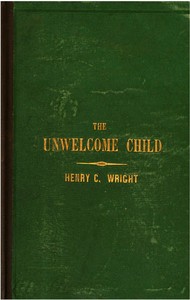
The unwelcome child : $b Or, The crime of an undesigned and undesired maternity
Written by Henry Clarke Wright
Chaptra reads alongside you — AI insights, chapter breakdowns and reader discussions for every book. Join free
About this book
Reading guide
Themes, characters and key ideas in The unwelcome child : $b Or, The crime of an undesigned and undesired maternity, written by Chaptra AI.
- about 8 hours
- advanced
- didactic
- critical
- somber
Henry Clarke Wright's "The Unwelcome Child" is a potent 19th-century polemic that challenges prevailing societal norms and moral judgments surrounding unwanted pregnancies and children born out of wedlock. Wright argues that the true 'crime' lies not with the child or the mother, but with a society that fails to provide support, understanding, and a just framework for maternity, particularly when it is 'undesigned and undesired.' The book critiques the hypocrisy of a system that condemns the innocent while perpetuating conditions that lead to their suffering, advocating for radical empathy and a redefinition of moral responsibility. It serves as a powerful call for social reform, emphasizing the inherent worth of every individual and the collective duty to foster a compassionate environment.
“The unwelcome child is a crime, but not against itself. It is a crime of society.”
Key themes
- Societal Hypocrisy and Moral Judgment
- Wright vehemently critiques the hypocrisy of a society that condemns 'unwelcome children' and their mothers while simultaneously failing to address the systemic issues, lack of support, and moral failings that lead to such circumstances. He argues that the 'crime' lies not with the individuals, but with the judgmental and uncompassionate societal structures.
- Social Responsibility and Reform
- Wright's work is a powerful call to action, asserting that society has a collective responsibility to create a more just and compassionate environment. He advocates for systemic reform rather than individual condemnation, urging readers to examine and change the conditions that lead to suffering and marginalization.
- The Inherent Worth and Dignity of Every Individual
- A core tenet of Wright's argument is the belief that every human life, regardless of the circumstances of its conception or birth, possesses inherent worth and dignity. He challenges the notion that a child can be 'unwelcome' in the eyes of a just creator or a truly moral society, advocating for unconditional acceptance and protection.
Worth discussing
How does Wright redefine the concept of 'crime' in relation to unwanted maternity, and what are the implications of this redefinition?
Chapter-by-chapter breakdowns, character arcs and the full thematic analysis come with a free account.
Discussions
No one has started one yet
Questions this book opens up
No discussions yet
Be the first to start a discussion about this book!
Sign up to start the discussionReviews
No reviews yet
Be the first to review this book!