
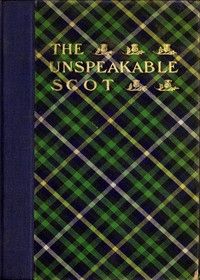
The Unspeakable Scot
Written by T. W. H. (Thomas William Hodgson) Crosland
Chaptra reads alongside you — AI insights, chapter breakdowns and reader discussions for every book. Join free
About this book
Reading guide
Themes, characters and key ideas in The Unspeakable Scot, written by Chaptra AI.
- about 8 hours
- advanced
- satirical
- provocative
- critical
T. W. H. Crosland's "The Unspeakable Scot" is an early 20th-century work of social commentary and satirical essays that offers a highly critical and often disdainful examination of Scottish culture and character. Approaching its subject with a blend of acerbic humor and sharp wit, the book challenges romanticized notions of Scottish identity, presenting an unflattering portrayal of Scots, particularly in their interactions with the English. Crosland sets out to debunk the perceived self-importance of Scots, contrasting traditional idealizations with a more cynical, 'New School' perspective. Through this provocative lens, the author explores themes of national pride, independence, and the complexities of cultural identity, establishing a polemical tone that permeates the entire work.
“"The Scot believes himself to be the salt of the earth, and the salt of the earth he unquestionably is, if you happen to be a Scot."”
Key themes
- National Identity and Pride
- The central theme of the book is the critique of Scottish national identity, particularly its expressions of pride. Crosland argues that this pride is often inflated, bordering on arrogance or self-delusion, and contrasts it with a more cynical, 'New School' perspective. He dissects how national identity is constructed and perceived, both internally and externally.
- Satire and Social Critique
- Crosland employs satire as his primary tool for social commentary, using humor, irony, and exaggeration to critique what he sees as the flaws and hypocrisies of Scottish character. The book is an extended exercise in cultural debunking, challenging romanticized notions through a sharp, often acerbic, lens.
- Anglo-Scottish Relations
- The book, written from an English perspective, implicitly and explicitly explores the historical and cultural tensions between England and Scotland. Crosland's critique often highlights perceived differences and grievances, positioning the 'Unspeakable Scot' in direct contrast to, and often at the expense of, the English.
Worth discussing
How does Crosland use humor and satire to convey his criticisms? Is this an effective rhetorical strategy?
Chapter-by-chapter breakdowns, character arcs and the full thematic analysis come with a free account.
Discussions
No one has started one yet
Questions this book opens up
No discussions yet
Be the first to start a discussion about this book!
Sign up to start the discussionReviews
No reviews yet
Be the first to review this book!