
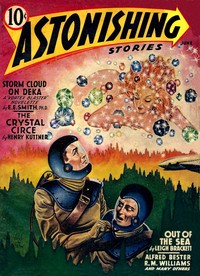
The unseen blushers
Written by Alfred Bester
Chaptra reads alongside you — AI insights, chapter breakdowns and reader discussions for every book. Join free
About this book
Read it with a club
Chaptra's fiction clubs — small groups reading the same books and talking as they go.


CraxMe Readers Book Club
Fiction
- 385 members
- 227 discussions
- Started December 2025
Welcome to the Readers Book Club. This is an informal group for like-minded people, where you can discuss books, share and recommend, track your reading progress, and lots more. Discuss Books — all about books. Discuss a particular book or genre, share your favourite quotes. Book Reviews — loved a book and highly recommend it? Or was it just average? Share your review and discuss with fellow readers. (May contain spoilers.) Group Reads — what is a book club without a group read! Buddy Reads — planning to read a book and looking for someone to read it with? Post in the Buddy Read request thread, find a reading buddy, and start discussing.
Read The unseen blushers alongside people who are reading it too.
Also here: Doorstops, First Lines Club
Chaptra Prime — paid clubs, every club feature, and unlimited reading support, for $5 a month or $60 once.
See PrimeReading guide
Themes, characters and key ideas in The unseen blushers, written by Chaptra AI.
- about 8 hours
- intermediate
- witty
- mysterious
- thought-provoking
Alfred Bester's "The Unseen Blushers" is a witty science fiction short story set during the pulp writing era, offering a meta-narrative examination of creativity and the fluid boundary between fiction and reality. The story centers on a luncheon gathering of pulp writers who engage in humorous banter and critique, particularly focusing on one writer, Dugan, and his unconvincing time machine plot. As the protagonist observes Dugan's mysterious demeanor and an unusual device, an underlying tension mounts, culminating in a revelation that suggests Dugan's story might be more real than imagined. The narrative deftly blurs the lines of time and creativity, prompting the protagonist and reader to question the nature of authorship and existence itself, leading to unexpected, personal consequences.
“"Every time a new idea surfaces, it's just the old one in a fresh coat of paint. Originality is a myth, gentlemen, a glorious, profitable myth."”
Key themes
- The Nature of Storytelling and Creativity
- This theme explores the very act of writing, the pursuit of originality, and the challenges faced by creators. It delves into whether stories are merely reflections of reality or possess the power to shape it, and the fine line between inspiration and plagiarism in a commercialized literary landscape.
- Reality vs. Fiction
- Central to the story, this theme examines the blurring boundaries between what is real and what is imagined. It questions how narratives can influence or even become reality, and the unsettling idea that one's own life might be part of someone else's story.
- Time and Causality
- This theme explores the non-linear or malleable nature of time, particularly through the concept of a time machine. It delves into the idea that events might not unfold in a straightforward causal chain, and that future or parallel narratives can influence the present.
Worth discussing
How does Bester use the setting of a pulp writers' luncheon to comment on the nature of creativity and commercial writing?
Chapter-by-chapter breakdowns, character arcs and the full thematic analysis come with a free account.
Discussions
No one has started one yet
Questions this book opens up
No discussions yet
Be the first to start a discussion about this book!
Sign up to start the discussionReviews
No reviews yet
Be the first to review this book!