
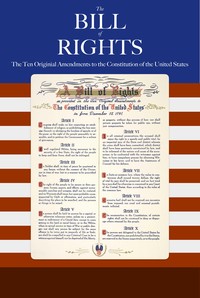
The United States Bill of Rights: The Ten Original Amendments to the Constitution of the United States
Written by United States
Chaptra reads alongside you — AI insights, chapter breakdowns and reader discussions for every book. Join free
About this book
Reading guide
Themes, characters and key ideas in The United States Bill of Rights: The Ten Original Amendments to the Constitution of the United States, written by Chaptra AI.
- about 2 hours
- advanced
- Authoritative
- Foundational
- Protective
The United States Bill of Rights is a foundational legal document comprising the first ten amendments to the U.S. Constitution, ratified in 1791. It serves as a critical bulwark for individual liberties, explicitly limiting governmental power and enumerating fundamental rights. The document establishes essential freedoms such as speech, religion, and the right to bear arms, alongside crucial protections for due process, fair trials, and privacy. By articulating these inherent rights, the Bill of Rights defines the essential relationship between the state and its citizens, cementing principles of limited government and civil liberty as cornerstones of American democracy. Its enduring influence underscores its pivotal role in constitutional law and the protection of human rights.
“Congress shall make no law respecting an establishment of religion, or prohibiting the free exercise thereof; or abridging the freedom of speech, or of the press; or the right of the people peaceably to assemble, and to petition the Government for a redress of grievances.”
Key themes
- Individual Liberty and Rights
- This is the overarching theme, emphasizing that individuals possess inherent freedoms that government cannot infringe upon. The Bill of Rights meticulously lists these protections, from freedom of speech and religion to the right to due process, ensuring that citizens retain autonomy and dignity against state power.
- Limited Government and Checks on Power
- A core principle embedded throughout the document is the idea that governmental power must be constrained to prevent tyranny. Each amendment functions as a specific limitation on what the federal government can do, ensuring that its authority is derived from and accountable to the people.
- Due Process and Fair Legal Proceedings
- This theme ensures that individuals accused of crimes or involved in legal disputes are treated fairly and justly by the legal system. It establishes a series of procedural safeguards designed to prevent arbitrary arrest, unfair trials, and cruel punishment.
Worth discussing
How have judicial interpretations of specific amendments (e.g., First, Second, Fourth) evolved since their ratification, and what are the implications of these changes?
Chapter-by-chapter breakdowns, character arcs and the full thematic analysis come with a free account.
Discussions
No one has started one yet
Questions this book opens up
No discussions yet
Be the first to start a discussion about this book!
Sign up to start the discussionReviews
No reviews yet
Be the first to review this book!