
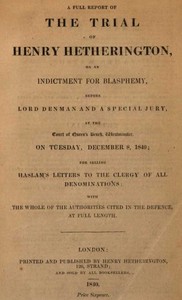
The Trial of Henry Hetherington, on an Indictment for Blasphemy
Written by H. (Henry) Hetherington
Chaptra reads alongside you — AI insights, chapter breakdowns and reader discussions for every book. Join free
About this book
Reading guide
Themes, characters and key ideas in The Trial of Henry Hetherington, on an Indictment for Blasphemy, written by Chaptra AI.
- about 8 hours
- advanced
- defiant
- intellectual
- serious
"The Trial of Henry Hetherington, on an Indictment for Blasphemy" is an early 19th-century historical account detailing the legal battle of publisher Henry Hetherington. The work meticulously documents his trial for blasphemy, stemming from his publication of critiques against the Old Testament and established religious institutions. Hetherington emerges as a staunch defender of free inquiry and expression, challenging prevailing legal and societal norms that sought to stifle dissenting opinions. The book presents the formal indictment, prosecution arguments, and Hetherington's compelling defense, framing his criticisms as a pursuit of truth rather than malicious intent. This detailed report not only chronicles a specific historical event but also engages with enduring themes of free speech and the inherent tension between religious dogma and rational thought.
“defends his right to free inquiry and expression against the backdrop of legal and societal norms that seek to suppress dissenting views.”
Key themes
- Freedom of Speech and Press
- This is the foundational theme, as the entire trial revolves around Hetherington's right to publish and express views critical of established religion. The book highlights the historical struggle to define the limits of free expression against state and religious authority.
- Conflict Between Religion and Reason
- The book explores the tension between faith-based dogma and rational, critical inquiry. Hetherington's critique of the Old Testament represents a challenge to traditional religious authority from a position of reason and a 'quest for truth'.
- Censorship and Dissent
- The trial itself is an act of state-sanctioned censorship, aimed at suppressing Hetherington's dissenting views. The book illustrates the mechanisms by which powerful institutions attempt to control public discourse and punish those who challenge the status quo.
Worth discussing
To what extent should freedom of speech extend to critiques of religion?
Chapter-by-chapter breakdowns, character arcs and the full thematic analysis come with a free account.
Discussions
No one has started one yet
Questions this book opens up
No discussions yet
Be the first to start a discussion about this book!
Sign up to start the discussionReviews
No reviews yet
Be the first to review this book!