
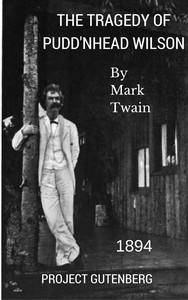
The Tragedy of Pudd'nhead Wilson
Written by Mark Twain
Chaptra reads alongside you — AI insights, chapter breakdowns and reader discussions for every book. Join free
About this book
Reading guide
Themes, characters and key ideas in The Tragedy of Pudd'nhead Wilson, written by Chaptra AI.
- about 8 hours
- intermediate
- dark
- satirical
- tragic
Mark Twain's "The Tragedy of Pudd'nhead Wilson" is a biting satire set in the antebellum South, exploring the arbitrary nature of racial identity and the profound influence of environment over heredity. The narrative centers on a seemingly innocuous baby swap orchestrated by the enslaved woman Roxy, which leads to a tragic reversal of fortunes and identities for her biological son and her master's son. As the story unfolds, the ostracized lawyer David Wilson, nicknamed Pudd'nhead, employs his unusual hobby of fingerprinting to unravel a murder mystery, exposing the deep-seated prejudices and moral decay within the small town of Dawson's Landing. The novel delves into complex questions of justice, social hypocrisy, and the true meaning of freedom and bondage, culminating in a poignant commentary on the destructive legacy of slavery.
“"Training is everything. The peach was once a bitter almond; cauliflower is nothing but cabbage with a college education."”
Key themes
- Identity: Nature vs. Nurture
- This is the core theme of the novel, explored through the baby swap. Twain meticulously demonstrates how environment, upbringing, and social conditioning profoundly shape an individual's character and destiny, often overriding inherent genetic predispositions. 'Tom,' born with 'black blood' but raised white, becomes degenerate, while 'Chambers,' born white but raised enslaved, retains dignity and kindness. The novel argues that societal labels and experiences are far more formative than bloodline.
- Race and Slavery
- Twain launches a scathing critique of the arbitrary and dehumanizing institution of slavery and the racial prejudices that underpinned it. The novel highlights the absurdity of defining a person's worth and destiny based on a fraction of 'black blood,' showing how society's racial categories create immense suffering and injustice. The tragic fates of both Roxy and her son underscore the profound and destructive impact of racial hierarchy.
- Justice and Law
- The novel critically examines the flaws and biases within the legal system and the concept of justice itself. The town's initial dismissal of Pudd'nhead Wilson's talents, their readiness to wrongly condemn the Italian twins, and the ultimate, often ironic, application of justice (e.g., Tom being sold into slavery) all highlight the imperfections of human law. True justice is often delayed, twisted, or incomplete, particularly when influenced by social prejudice.
Worth discussing
How does Twain use the baby swap to explore the 'nature vs. nurture' debate? What conclusions does the novel seem to draw?
Chapter-by-chapter breakdowns, character arcs and the full thematic analysis come with a free account.
Discussions
No one has started one yet
Questions this book opens up
No discussions yet
Be the first to start a discussion about this book!
Sign up to start the discussionReviews
No reviews yet
Be the first to review this book!