
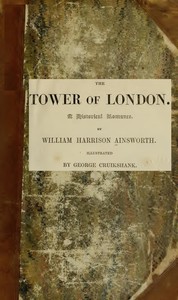
The Tower of London: A Historical Romance, Illustrated
Written by William Harrison Ainsworth
Chaptra reads alongside you — AI insights, chapter breakdowns and reader discussions for every book. Join free
About this book
Read it with a club
Small groups reading the same books and talking as they go.


News
- 4 members
- 1,813 discussions
- Active Sep 11
Read The Tower of London: A Historical Romance, Illustrated alongside people who are reading it too.
Also here: News Bulletin, Just Joking....
Chaptra Prime — paid clubs, every club feature, and unlimited reading support, for $5 a month or $60 once.
See PrimeReading guide
Themes, characters and key ideas in The Tower of London: A Historical Romance, Illustrated, written by Chaptra AI.
- about 10 hours
- intermediate
- dark
- historical
- tragic
William Harrison Ainsworth's "The Tower of London: A Historical Romance" plunges readers into the perilous political landscape of 16th-century England, focusing on the ill-fated nine-day reign of Lady Jane Grey. The novel vividly portrays the iconic Tower of London as both a majestic palace and a grim prison, central to the power struggles that ensnare Jane, a reluctant queen manipulated by her ambitious father-in-law, the Duke of Northumberland. As Jane's brief reign unfolds amidst public mistrust and courtly intrigue, she faces a tragic destiny sealed by the rise of Mary Tudor and the machinations of figures like Simon Renard. Ainsworth masterfully blends historical events with dramatic flair, creating a poignant narrative of ambition, betrayal, and the brutal realities of power.
“"The Tower of London! the Tower of London!" cried a voice, in a tone of such profound melancholy, that it struck a chill to the heart of the hearer.”
Key themes
- Ambition and Its Corrupting Influence
- The novel vividly portrays how unchecked ambition, particularly in the Duke of Northumberland, leads to ruthless machinations, betrayal, and ultimately, self-destruction. It illustrates the moral compromises and human cost exacted by the pursuit of power.
- The Nature of Power and Authority
- The novel scrutinizes how power is seized, maintained, and lost, highlighting its arbitrary and often brutal nature. It contrasts legitimate authority (Mary's claim) with usurped power (Jane's reign) and explores the role of public opinion, religious doctrine, and military force in establishing governance.
- Fate vs. Free Will
- Lady Jane Grey's story is presented as a tragic unfolding of destiny, where her personal desires and intelligence are powerless against the historical forces and political machinations that dictate her fate. The novel questions the extent to which individuals can shape their own lives amidst grand historical currents.
Worth discussing
How does Ainsworth use the Tower of London as more than just a setting, making it almost a character in itself? What symbolic weight does it carry?
Chapter-by-chapter breakdowns, character arcs and the full thematic analysis come with a free account.
Discussions
No one has started one yet
Questions this book opens up
No discussions yet
Be the first to start a discussion about this book!
Sign up to start the discussionReviews
No reviews yet
Be the first to review this book!