
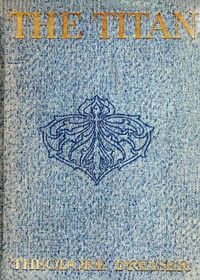
The Titan
Written by Theodore Dreiser
Chaptra reads alongside you — AI insights, chapter breakdowns and reader discussions for every book. Join free
About this book
Reading guide
Themes, characters and key ideas in The Titan, written by Chaptra AI.
- about 25 hours
- advanced
- ambitious
- realistic
- cynical
The Titan, the second novel in Theodore Dreiser's 'Trilogy of Desire,' continues the epic saga of Frank Cowperwood, a ruthless and ambitious financier, as he attempts to rebuild his fortune and establish a new empire in Chicago. Released from prison after the events of 'The Financier,' Cowperwood relentlessly pursues control of the city's burgeoning streetcar system, battling powerful industrialists and corrupt politicians. Simultaneously, his insatiable desire for beauty manifests in a series of scandalous extramarital affairs, most notably with the young, sophisticated Berenice Fleming, further complicating his already tumultuous personal life. The novel chronicles his relentless drive for power, wealth, and aesthetic gratification, painting a vast canvas of American industrial capitalism and moral ambiguity at the turn of the 20th century.
“"He was not going to be beaten. That was the one fixed thing in his mind. He was going to win."”
Key themes
- Ambition and the Will to Power
- Central to Cowperwood's character, this theme explores his relentless, almost pathological drive to acquire wealth, control, and influence. Dreiser portrays ambition not merely as a desire for success, but as a fundamental, amoral force of nature that compels individuals like Cowperwood to dominate their environment, irrespective of ethical considerations. It's a raw, elemental force that shapes his every action.
- Capitalism and Industrialism
- The novel is a detailed examination of American industrial capitalism during the Gilded Age. It showcases the cutthroat competition, the vast fortunes amassed, the exploitation of resources, and the pervasive corruption that characterized the era. Dreiser presents capitalism as a brutal, Darwinian struggle where only the strongest and most cunning survive, often at the expense of public welfare or traditional morality.
- Moral Relativism and Naturalism
- Dreiser's naturalistic worldview permeates the novel, suggesting that human beings are largely products of their heredity and environment, driven by powerful, often amoral, urges. Cowperwood's actions are presented not as inherently good or evil, but as inevitable consequences of his innate desires and the social forces around him. The novel challenges conventional morality, positing that societal rules are often arbitrary and that 'great men' often operate outside them.
Worth discussing
To what extent is Frank Cowperwood a product of his environment, and to what extent is he driven by innate character traits?
Chapter-by-chapter breakdowns, character arcs and the full thematic analysis come with a free account.
Discussions
No one has started one yet
Questions this book opens up
No discussions yet
Be the first to start a discussion about this book!
Sign up to start the discussionReviews
No reviews yet
Be the first to review this book!