
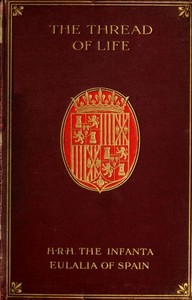
The thread of life
Written by Infanta of Spain Eulalia
Chaptra reads alongside you — AI insights, chapter breakdowns and reader discussions for every book. Join free
About this book
Reading guide
Themes, characters and key ideas in The thread of life, written by Chaptra AI.
- about 8 hours
- intermediate
- reflective
- historical
- observational
Eulalia, Infanta of Spain, offers a remarkably candid and insightful autobiography in "The Thread of Life," chronicling her experiences as a member of European royalty during a period of immense social and political upheaval. The memoir provides a unique, first-person perspective on the rigid protocols of court life, her extensive travels across continents, and her personal quest for independence against the backdrop of changing monarchies. It's a reflection on duty, freedom, and the evolving role of women, presented through the eyes of a princess who often chafed against tradition. Her narrative serves as both a historical document and a deeply personal exploration of identity within a highly public and constrained existence.
“"I had too much common sense to believe in the divine right of kings, and too much pride to accept my position without question."”
Key themes
- Duty vs. Personal Freedom
- This is the central conflict of Eulalia's life and the memoir. She constantly grapples with the expectations and responsibilities of her royal birth against her innate desire for autonomy, intellectual exploration, and a life lived on her own terms. The theme explores the cost of privilege and the struggle to define oneself when one's identity is largely predetermined by birth.
- The Changing Face of Monarchy
- Eulalia lived through a period when many European monarchies were either falling or significantly reducing their power. She offers a unique insider's perspective on this decline, often expressing a pragmatic understanding and even sympathy for republican ideals. The theme explores the tension between tradition and modernity in governance and the adaptation (or failure to adapt) of royal institutions.
- Women's Role and Independence
- Eulalia, as a strong-willed royal woman in a patriarchal society, inherently embodies and explores the theme of female independence. She critiques the limited options available to women, particularly those of her class, and actively seeks to forge a path that allows for intellectual engagement, personal agency, and a life beyond domesticity or mere ceremonial duty.
Worth discussing
How does Eulalia's upbringing and royal status shape her perspective on freedom and duty?
Chapter-by-chapter breakdowns, character arcs and the full thematic analysis come with a free account.
Discussions
No one has started one yet
Questions this book opens up
No discussions yet
Be the first to start a discussion about this book!
Sign up to start the discussionReviews
No reviews yet
Be the first to review this book!