
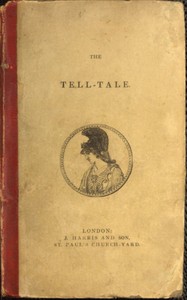
The Tell-Tale: An Original Collection of Moral and Amusing Stories
Written by Catharine Parr Strickland Traill
Chaptra reads alongside you — AI insights, chapter breakdowns and reader discussions for every book. Join free
About this book
Reading guide
Themes, characters and key ideas in The Tell-Tale: An Original Collection of Moral and Amusing Stories, written by Chaptra AI.
- about 8 hours
- beginner
- didactic
- whimsical
- moralistic
Catharine Parr Strickland Traill's "The Tell-Tale" is an early 19th-century collection of moral and amusing short stories designed to educate and entertain young readers. Framed by Mrs. Dormer narrating tales to her eager children, the book uses whimsical narratives, often featuring fairies and children, to impart ethical lessons. A prime example, "Arphu, or the Fairy Kitten," illustrates the central theme of empathy through the transformation of a cruel fairy prince into a vulnerable creature. This collection serves as a didactic tool, emphasizing the importance of kindness, the consequences of one's actions, and the development of a moral conscience in its young audience.
Key themes
- Empathy and Consequences
- This theme is centrally explored through the story of Arphu, where his cruel actions lead directly to a transformation that forces him to experience the suffering he inflicted. It teaches that understanding others' pain is crucial for moral development and that negative actions inevitably have repercussions.
- Moral Instruction and Didacticism
- The overarching purpose of the entire collection is to provide clear moral lessons and guide children towards virtuous behavior. Each story serves as a parable, designed to instill specific ethical values.
- Kindness vs. Cruelty
- This theme is presented as a clear dichotomy, particularly in 'Arphu,' where the prince's initial cruelty is contrasted with the suffering he experiences and the kindness he eventually learns. It champions compassionate behavior towards all living beings.
Worth discussing
How does 'The Tell-Tale' reflect the educational values and societal norms of the early 19th century?
Chapter-by-chapter breakdowns, character arcs and the full thematic analysis come with a free account.
Discussions
No one has started one yet
Questions this book opens up
No discussions yet
Be the first to start a discussion about this book!
Sign up to start the discussionReviews
No reviews yet
Be the first to review this book!