
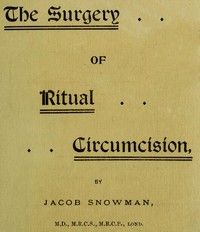
The Surgery of Ritual Circumcision
Written by Jacob Snowman
Chaptra reads alongside you — AI insights, chapter breakdowns and reader discussions for every book. Join free
About this book
Reading guide
Themes, characters and key ideas in The Surgery of Ritual Circumcision, written by Chaptra AI.
- about 15 hours
- advanced
- informative
- clinical
- historical
Jacob Snowman's 'The Surgery of Ritual Circumcision' is a seminal non-fiction work that offers a comprehensive, scholarly examination of ritual circumcision from medical, historical, and religious perspectives. The book meticulously traces the practice from its ancient origins across various cultures and faiths, detailing its evolution in surgical technique, associated risks, and the theological justifications provided. It stands as a definitive academic resource, bridging the gap between medical science, anthropology, and religious studies to provide a holistic understanding of this enduring human ritual.
“"The practice of ritual circumcision, deeply embedded in human history, represents a complex interplay of hygiene, identity, and divine commandment."”
Key themes
- Cultural and Religious Significance of Rituals
- This theme explores how ritual circumcision is deeply embedded in the cultural identity and religious practices of various societies, particularly Judaism and Islam. It examines the theological justifications, social functions (e.g., tribal marking, covenant), and the role of tradition in perpetuating the practice across generations.
- Evolution of Medical and Surgical Practice
- The book meticulously charts the historical development of surgical techniques, instruments, and medical understanding related to circumcision. It shows how medical knowledge has advanced, from rudimentary ancient methods to more refined modern procedures, and how these changes have impacted the safety and efficacy of the ritual.
- Ethics and Public Health
- Snowman implicitly and explicitly addresses the ethical dimensions of ritual circumcision, particularly concerning the health and well-being of the individual versus religious or cultural mandates. It touches upon historical public health concerns (e.g., infection, hemorrhage) and sets the stage for contemporary discussions on informed consent and bodily autonomy.
Worth discussing
How does Snowman balance medical objectivity with the religious and cultural significance of circumcision?
Chapter-by-chapter breakdowns, character arcs and the full thematic analysis come with a free account.
Discussions
No one has started one yet
Questions this book opens up
No discussions yet
Be the first to start a discussion about this book!
Sign up to start the discussionReviews
No reviews yet
Be the first to review this book!