
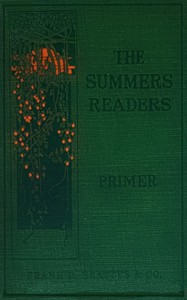
The Summers readers: primer
Written by Maud Summers
Chaptra reads alongside you — AI insights, chapter breakdowns and reader discussions for every book. Join free
About this book
Reading guide
Themes, characters and key ideas in The Summers readers: primer, written by Chaptra AI.
- about 2 hours
- beginner
- educational
- wholesome
- simple
Maud Summers' "The Summers Readers: Primer" is an early 20th-century educational text designed to introduce young children to reading. Through a structured progression of simple rhymes, poems, and short stories, it engages learners with themes of nature, family, and daily activities. The primer utilizes repetitive language, rhythmic patterns, and familiar nursery rhymes to build foundational literacy skills. Enhanced with illustrations, it aims to create an interactive and enjoyable learning experience, fostering an early love for reading and language acquisition.
“See the cat. The cat is black.”
Key themes
- Early Literacy and Language Acquisition
- This is the foundational theme, as the entire book is designed to teach children how to read. It explores methods of introducing phonics, sight words, sentence structure, and comprehension through repetition, rhythm, and visual aids. The book emphasizes the joy and accessibility of language.
- Family and Community Values
- The primer implicitly teaches and reinforces traditional family structures and community interactions. Stories often feature children with parents, siblings, or neighbors, emphasizing cooperation, kindness, and simple domestic life. It presents an idealized, wholesome view of social bonds.
- Nature and Appreciation for the Outdoors
- Many verses and stories focus on elements of the natural world: animals, plants, weather, and outdoor activities. This theme encourages children to observe and appreciate their environment, fostering a connection to nature and an understanding of simple ecological concepts.
Worth discussing
How do early 20th-century primers like this one compare to modern methods of teaching reading? What are the pros and cons of each approach?
Chapter-by-chapter breakdowns, character arcs and the full thematic analysis come with a free account.
Discussions
No one has started one yet
Questions this book opens up
No discussions yet
Be the first to start a discussion about this book!
Sign up to start the discussionReviews
No reviews yet
Be the first to review this book!