
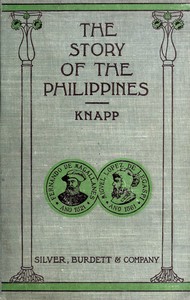
The story of the Philippines, for use in the schools of the Philippine Islands
Written by Adeline Knapp
Chaptra reads alongside you — AI insights, chapter breakdowns and reader discussions for every book. Join free
About this book
Reading guide
Themes, characters and key ideas in The story of the Philippines, for use in the schools of the Philippine Islands, written by Chaptra AI.
- about 8 hours
- intermediate
- educational
- informative
- historical
Adeline Knapp's "The Story of the Philippines" is an early 20th-century educational textbook designed to teach Filipino students their nation's history under American colonial rule. The book aims to provide a comprehensive understanding of the archipelago's past, from pre-colonial times through European arrival, Spanish colonization, and the American occupation, emphasizing key events, figures, geography, and culture. It underscores the importance of historical knowledge for future planning and instilling national pride, while simultaneously framing history through a lens that likely supported American administrative goals. Through accessible language and illustrations, the text sought to shape a specific narrative for a generation of Filipino youth, highlighting both challenges and the potential for growth within the prevailing political context.
“"To understand the present and plan wisely for the future, one must first recognize the conditions of the past."”
Key themes
- National Identity and Self-Determination (under colonial influence)
- The book explicitly aims to instill pride in Filipino heritage and potential. However, this identity is framed within the context of American colonial rule. The theme explores how a sense of nationhood is constructed for a people who have experienced centuries of foreign domination, and how their self-determination is presented as a gradual process guided by the colonizing power. It examines the tension between celebrating indigenous history and adopting the colonizer's vision for the future.
- Colonialism and its Legacy
- The entire historical narrative is framed by the experience of colonialism, first Spanish and then American. The theme examines the profound impact of foreign rule on the Philippines' political structures, social customs, religion, and economy. While the book, due to its context, might present a somewhat sanitized view of colonialism, it still inherently deals with the power dynamics, cultural shifts, and the long-term effects of foreign intervention on a nation's development. It highlights the 'challenges' faced by Filipinos under colonial rule.
- The Role of Education and Progress
- Education is presented as a fundamental tool for societal advancement and the realization of a 'better future'. The book itself is a product of this belief, designed to educate the youth. This theme explores how knowledge of history, particularly as curated by the American administration, is seen as essential for progress, modernization, and the development of responsible citizens capable of self-governance. Progress is often implicitly linked to adopting Western models and values.
Worth discussing
How does the historical context of the book's publication (early American colonial period) influence its narrative and themes?
Chapter-by-chapter breakdowns, character arcs and the full thematic analysis come with a free account.
Discussions
No one has started one yet
Questions this book opens up
No discussions yet
Be the first to start a discussion about this book!
Sign up to start the discussionReviews
No reviews yet
Be the first to review this book!