
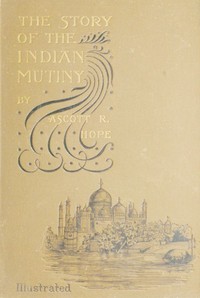
The Story of the Indian Mutiny
Written by A. R. Hope (Ascott Robert Hope) Moncrieff
Chaptra reads alongside you — AI insights, chapter breakdowns and reader discussions for every book. Join free
About this book
Reading guide
Themes, characters and key ideas in The Story of the Indian Mutiny, written by Chaptra AI.
- about 8 hours
- intermediate
- Historical
- Dramatic
- Tense
A. R. Hope Moncrieff's "The Story of the Indian Mutiny" is a late 19th-century historical account detailing the significant 1857 uprising against British rule. The author aims to present a factual recounting while also emphasizing dramatic and romantic elements to engage a younger readership. The narrative commences by thoroughly exploring India's socio-political landscape, history, and diverse cultures, establishing the context for burgeoning British dominance. It delves into the origins of colonial rule and the escalating discontent among various Indian factions, highlighting socio-religious factors, native superstitions, and cultural practices as key grievances leading to the rebellion. The book sets the stage for the intense episodes and pivotal figures that defined the mutiny, offering a vivid, albeit potentially biased, portrayal of the conflict.
“"India, a land of ancient mysteries and myriad peoples, lay ripe for the hand of destiny – or the grasp of empire."”
Key themes
- Colonialism and Imperialism
- The book fundamentally explores the mechanisms and consequences of British colonial rule in India, from its establishment to the challenges it faced during the mutiny. It examines the British perspective on governance, expansion, and their perceived 'right' to rule, while inadvertently showcasing the tensions inherent in such a system.
- Rebellion and Resistance
- A central theme is the eruption and progression of the Indian Mutiny itself, representing a significant act of resistance against an occupying power. The book details the various forms this rebellion took, from military revolt to broader civilian unrest, and the different motivations (religious, cultural, political) driving it from the author's perspective.
- Cultural Clash and Misunderstanding
- Moncrieff emphasizes the collision of British and Indian cultures as a significant factor in the mutiny. The narrative highlights how British insensitivity to Indian customs and 'superstitions,' alongside Indian grievances against foreign practices, led to deep-seated resentment and ultimately conflict. This theme is presented primarily from a British viewpoint, often portraying Indian culture as exotic or irrational.
Worth discussing
How does Moncrieff's late 19th-century perspective influence his portrayal of the Indian Mutiny, particularly concerning 'native superstitions' and 'romantic aspects'?
Chapter-by-chapter breakdowns, character arcs and the full thematic analysis come with a free account.
Discussions
No one has started one yet
Questions this book opens up
No discussions yet
Be the first to start a discussion about this book!
Sign up to start the discussionReviews
No reviews yet
Be the first to review this book!