
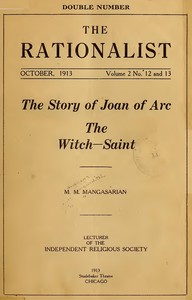
The Story of Joan of Arc the Witch-Saint
Written by M. M. (Mangasar Mugurditch) Mangasarian
Chaptra reads alongside you — AI insights, chapter breakdowns and reader discussions for every book. Join free
About this book
Reading guide
Themes, characters and key ideas in The Story of Joan of Arc the Witch-Saint, written by Chaptra AI.
- about 8 hours
- intermediate
- historical
- critical
- tragic
M. M. Mangasarian's "The Story of Joan of Arc the Witch-Saint" offers a critical early 20th-century examination of Joan of Arc's life, from her meteoric rise as a military leader to her tragic condemnation and execution by the Catholic Church. The book meticulously details the socio-political motives behind her trial for heresy and witchcraft, contrasting this with her eventual posthumous canonization as a saint. Mangasarian argues that Joan's profound visions, labeled as demonic by her accusers, were instead manifestations of her extraordinary inner strength and unwavering resolve. Ultimately, the narrative serves as a powerful critique of institutional authority, highlighting the inherent contradictions and shifting perceptions surrounding faith, rationality, and justice.
“Her 'visions,' dismissed as witchcraft by her persecutors, were in truth the fierce clarion call of a nation's spirit, echoing the profoundest convictions of a resolute soul.”
Key themes
- Institutional Hypocrisy and the Abuse of Power
- This theme is central to Mangasarian's analysis, exploring how powerful institutions, particularly the Catholic Church, can manipulate religious doctrine and legal processes for political ends. The book dissects the trial of Joan of Arc, demonstrating how her condemnation was driven by the Church's desire to maintain control and by the political agenda of the English and Burgundian factions, rather than a genuine concern for theological truth. It highlights the profound irony of her being condemned as a heretic and witch, only to be canonized as a saint centuries later by the same institution.
- Faith, Rationality, and Visionary Experience
- Mangasarian delves into the complex relationship between Joan's profound faith and the rationalistic interpretations of her visions. The book presents Joan's 'voices' not necessarily as supernatural phenomena to be accepted or rejected, but as powerful manifestations of her inner strength, conviction, and perhaps even psychological resolve. This perspective challenges the rigid dichotomy often presented between faith and reason, suggesting that deep personal belief can manifest in ways that defy conventional understanding and yet be profoundly impactful.
- Heroism, Martyrdom, and Enduring Legacy
- The book explores the multifaceted nature of Joan's heroism—her courage in leading armies, her steadfastness during her trial, and her ultimate sacrifice. Mangasarian frames her not just as a religious martyr, but as a secular symbol of resistance against oppression and a testament to the power of individual will. Her transformation from a condemned figure to an enduring icon highlights how historical figures can transcend their immediate circumstances to inspire generations, often through their suffering and defiance.
Worth discussing
How does Mangasarian's framing of Joan as a 'Witch-Saint' challenge traditional narratives of her life and legacy?
Chapter-by-chapter breakdowns, character arcs and the full thematic analysis come with a free account.
Discussions
No one has started one yet
Questions this book opens up
No discussions yet
Be the first to start a discussion about this book!
Sign up to start the discussionReviews
No reviews yet
Be the first to review this book!