
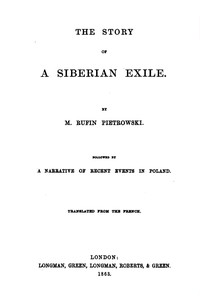
The Story of a Siberian Exile; Followed by a Narrative of Recent Events in Poland
Written by Rufin Piotrowski
Chaptra reads alongside you — AI insights, chapter breakdowns and reader discussions for every book. Join free
About this book
Reading guide
Themes, characters and key ideas in The Story of a Siberian Exile; Followed by a Narrative of Recent Events in Poland, written by Chaptra AI.
- about 8 hours
- intermediate
- dark
- somber
- resilient
Piotrowski's "The Story of a Siberian Exile" is a poignant 19th-century historical account detailing the harrowing experiences of a Polish political dissident under Russian rule. The narrative, presented through the alias 'Joseph Catharo,' begins with the protagonist's covert return to Poland and the intense surveillance and suspicion he faces, setting the stage for his inevitable capture and brutal deportation to Siberia. Through personal suffering and observations of fellow prisoners, the book offers a powerful indictment of systemic oppression, exploring themes of national identity, resistance, and the enduring human spirit amidst profound despair. It serves as a vital historical testimony to the brutalities of political exile and the unwavering patriotism of the Polish people.
“Though our bodies were bound, the spirit of Poland remained unconquered within us, a flame that no Siberian frost could extinguish.”
Key themes
- National Identity and Patriotism
- This theme is central to the narrative, exploring how Polish national identity and a deep sense of patriotism become both the cause of Piotrowski's suffering and a powerful source of resilience. The book illustrates how, despite Russian attempts to suppress it, the shared language, culture, and desire for an independent Poland unite the exiles and fuel their hope.
- Resistance and Rebellion
- The theme explores various forms of resistance against Russian oppression, ranging from active political rebellion (which led to Piotrowski's exile) to more subtle acts of defiance, such as maintaining one's cultural identity, sharing stories, and simply enduring the suffering. The act of writing this memoir itself is presented as a powerful form of intellectual and historical resistance.
- Suffering and Resilience
- This theme delves into the physical and psychological toll of imprisonment and exile, detailing the brutal conditions, starvation, forced labor, and mental anguish. Simultaneously, it highlights the extraordinary human capacity for resilience, endurance, and finding glimmers of hope or humanity even in the most dehumanizing environments.
Worth discussing
How does Piotrowski use his personal suffering to represent the collective experience of Polish exiles?
Chapter-by-chapter breakdowns, character arcs and the full thematic analysis come with a free account.
Discussions
No one has started one yet
Questions this book opens up
No discussions yet
Be the first to start a discussion about this book!
Sign up to start the discussionReviews
No reviews yet
Be the first to review this book!