
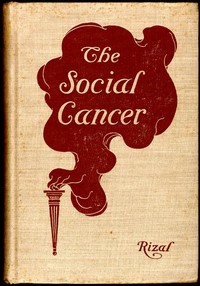
The Social Cancer: A Complete English Version of Noli Me Tangere
Written by José Rizal
Chaptra reads alongside you — AI insights, chapter breakdowns and reader discussions for every book. Join free
About this book
Reading guide
Themes, characters and key ideas in The Social Cancer: A Complete English Version of Noli Me Tangere, written by Chaptra AI.
- about 15 hours
- intermediate
- tragic
- critical
- melancholy
José Rizal's "The Social Cancer" (Noli Me Tangere) is a searing indictment of Spanish colonial rule in the Philippines during the late 19th century. The novel follows Crisostomo Ibarra, a young, idealistic Filipino who returns home after studying in Europe, only to confront the pervasive corruption, injustice, and hypocrisy of the friars and colonial government. His attempts at reform are systematically thwarted, leading to a tragic unraveling of his life and the lives of those around him, particularly his beloved Maria Clara. Through vivid characterizations and a compelling narrative, Rizal exposes the deep-seated social ills that plagued his homeland, laying bare the suffering of the common people and the abuses of power. The book ultimately serves as a powerful call for national awakening and reform, profoundly influencing the Philippine nationalist movement.
“"I die without seeing the dawn break upon my country... You, who are to see the dawn, welcome it, and do not forget those who fell during the night."”
Key themes
- Colonialism and Oppression
- The novel is a direct critique of Spanish colonial rule, exposing the abuses of power, economic exploitation, and suppression of native culture and identity. It illustrates how the colonial system perpetuates injustice and prevents progress.
- Religious Hypocrisy and Corruption
- Rizal starkly contrasts the true teachings of Christianity with the corrupt practices and moral failings of the friars. The Church, meant to be a moral guide, is depicted as an institution of power, greed, and abuse, manipulating the pious and exploiting the poor.
- Social Injustice and Class Divide
- The novel vividly portrays the vast chasm between the ruling Spanish elite (and their Filipino collaborators) and the suffering masses. It highlights how justice is denied to the poor, and social mobility is stifled, leading to widespread misery.
Worth discussing
How does Rizal use satire and irony to critique Spanish colonial society and the Catholic Church?
Chapter-by-chapter breakdowns, character arcs and the full thematic analysis come with a free account.
Discussions
No one has started one yet
Questions this book opens up
No discussions yet
Be the first to start a discussion about this book!
Sign up to start the discussionReviews
No reviews yet
Be the first to review this book!