
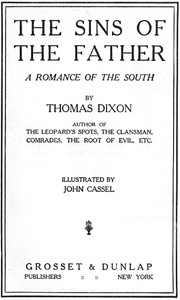
The Sins of the Father: A Romance of the South
Written by Thomas Dixon
Chaptra reads alongside you — AI insights, chapter breakdowns and reader discussions for every book. Join free
About this book
Reading guide
Themes, characters and key ideas in The Sins of the Father: A Romance of the South, written by Chaptra AI.
- about 8 hours
- intermediate
- dark
- tense
- propagandistic
Thomas Dixon Jr.'s "The Sins of the Father: A Romance of the South" plunges into the turbulent post-Civil War Reconstruction era, chronicling the struggles of Major Daniel Norton, a newspaper editor in the South. The novel vividly portrays a society grappling with profound racial divisions, political corruption, and the violent emergence of the Ku Klux Klan. Norton's journey is marked by his witnessing of white subjugation under a black-majority government and his complex, forbidden attraction to Cleo, a mixed-race woman. This narrative frames a deeply polemical exploration of Southern honor, racial purity, and the perceived injustices faced by white Southerners during this tumultuous period, ultimately advocating for a specific, racially charged vision of redemption.
“"The South lay prostrate, stripped bare by the conqueror's hand, yet her spirit burned with an unquenchable fire for justice and honor."”
Key themes
- Racial Division and White Supremacy
- This is the central theme, exploring the rigid racial hierarchy that Dixon believed was essential for Southern society. The novel explicitly champions white supremacy, portraying African Americans as inherently inferior and incapable of self-governance. It depicts the Reconstruction era as a catastrophic attempt to upend this natural order, leading to chaos and injustice for whites.
- Reconstruction Era Politics and Corruption
- The novel presents a highly biased view of Reconstruction, demonizing the federal government's policies, carpetbaggers, and the newly enfranchised black population. It frames the era as one of profound political corruption, misrule, and exploitation of the South, creating a climate of injustice that necessitated a violent response from white Southerners.
- Racial Purity and Miscegenation
- Dixon's work is heavily invested in the idea of racial purity, particularly the purity of the white race, and depicts miscegenation (racial mixing) as a grave sin and a threat to civilization. The character of Cleo and Major Norton's attraction to her serve as a central dramatic device to explore the dangers and tragic consequences of transgressing racial boundaries, from Dixon's perspective.
Worth discussing
How does Dixon's portrayal of the Reconstruction era align with or diverge from historical accounts you've encountered?
Chapter-by-chapter breakdowns, character arcs and the full thematic analysis come with a free account.
Discussions
No one has started one yet
Questions this book opens up
No discussions yet
Be the first to start a discussion about this book!
Sign up to start the discussionReviews
No reviews yet
Be the first to review this book!