
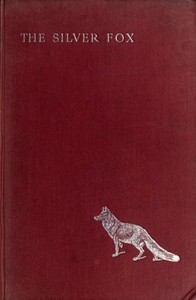
The Silver Fox
Written by Martin Ross,E. Oe. (Edith Oenone) Somerville
Chaptra reads alongside you — AI insights, chapter breakdowns and reader discussions for every book. Join free
About this book
Reading guide
Themes, characters and key ideas in The Silver Fox, written by Chaptra AI.
- about 8 hours
- intermediate
- humorous
- mysterious
- social commentary
Set in the late 19th century, "The Silver Fox" by Martin Ross and E. Œ. Somerville navigates the intricate social landscape of both England and Ireland through the eyes of various characters. The narrative initially centers on Lady Susan, a figure of wit and subtle superiority, and her interactions within an English social circle, particularly with the more reserved Miss Slaney. As the story progresses, it delves into personal conflicts and traditional expectations, moving towards rural Ireland where local folklore, embodied by an enigmatic grey fox, intertwines with daily life. The novel explores themes of social relationships, cultural identity, and the clash between modern sensibilities and ancient beliefs.
“"Hunger, my dears, is a far more potent force than good manners, and quite as ancient as any tradition."”
Key themes
- Social Class and Etiquette
- The novel prominently explores the rigid social hierarchies and unwritten rules of etiquette prevalent in late 19th-century England. Lady Susan's 'superiority and frivolity' and Miss Slaney's 'embarrassment and inadequacy' immediately highlight the distinctions and tensions between different social strata. The narrative delves into how these social codes dictate behavior, create subtle conflicts, and shape individual identities within the upper-class milieu.
- Folklore, Superstition, and Rationalism
- The novel deeply explores the tension between traditional folklore and modern rationalism, particularly through the figure of the 'intriguing, potentially supernatural, grey fox tied to local folklore.' This theme delves into the power of ancient beliefs within a community and how these beliefs interact with, challenge, or are perceived by characters from a more rational, scientific worldview. It questions the boundaries of reality and the role of the mystical in everyday life.
- Anglo-Irish Identity and Cultural Conflict
- A significant theme is the exploration of Anglo-Irish relations and the cultural clashes that arise from the interaction between English characters and the Irish setting. The narrative's shift from England to Ireland is crucial, allowing the authors to examine the differing values, beliefs, and traditions between the two cultures. This often involves contrasting English rationalism and social customs with Irish folklore and community life, highlighting perceptions and misunderstandings.
Worth discussing
How does Lady Susan's character embody or challenge the societal expectations of a late 19th-century English lady?
Chapter-by-chapter breakdowns, character arcs and the full thematic analysis come with a free account.
Discussions
No one has started one yet
Questions this book opens up
No discussions yet
Be the first to start a discussion about this book!
Sign up to start the discussionReviews
No reviews yet
Be the first to review this book!