
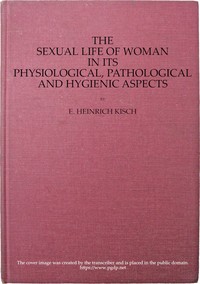
The sexual life of woman in its physiological, pathological and hygienic aspects
Written by E. Heinrich (Enoch Heinrich) Kisch
Chaptra reads alongside you — AI insights, chapter breakdowns and reader discussions for every book. Join free
About this book
Reading guide
Themes, characters and key ideas in The sexual life of woman in its physiological, pathological and hygienic aspects, written by Chaptra AI.
- about 12 hours
- advanced
- informative
- clinical
- authoritative
E. Heinrich Kisch's "The Sexual Life of Woman" is a foundational early 20th-century scientific treatise meticulously exploring female sexuality from a medical perspective. The work systematically examines the physiological, pathological, and hygienic aspects of a woman's life cycle, from puberty through menopause. Kisch posits that the reproductive organs profoundly influence both physical and mental well-being, asserting their crucial role in the broader fabric of human culture. Beyond presenting scientific findings, the author emphasizes the critical importance of education and proper hygiene in maintaining sexual health. This comprehensive study reflects the medical and societal understanding of female sexuality during its time, highlighting the complexities and significance attributed to menstruation, sexual activity, and reproductive health.
“"The sexual life of woman represents not merely an individual function, but rather a profound determinant of her entire physical and psychic existence, with far-reaching societal implications."”
Key themes
- Physiological Determinism of Female Experience
- This theme explores Kisch's central argument that a woman's physiological state, particularly her reproductive organs and cycles, fundamentally dictates her physical health, mental disposition, and even her societal role and capabilities. It posits that female identity and experience are largely governed by biological functions.
- Medicalization and Pathologization of Female Sexuality
- Kisch's work exemplifies the early 20th-century trend of framing female sexuality almost exclusively through a medical lens, often viewing variations or experiences outside of procreation as potential pathologies. This theme highlights how female sexual life became a subject for clinical diagnosis, treatment, and regulation by the medical profession.
- Societal Implications of Female Reproductive Life
- Kisch consistently links the individual sexual and reproductive life of women to broader societal structures and concerns. This theme explores how female fertility, health, and sexual conduct were perceived to impact family stability, population health, and the moral fiber of society, often reflecting eugenic or social control anxieties of the era.
Worth discussing
How did Kisch's early 20th-century scientific approach to female sexuality differ from previous moralistic or anecdotal understandings?
Chapter-by-chapter breakdowns, character arcs and the full thematic analysis come with a free account.
Discussions
No one has started one yet
Questions this book opens up
No discussions yet
Be the first to start a discussion about this book!
Sign up to start the discussionReviews
No reviews yet
Be the first to review this book!