
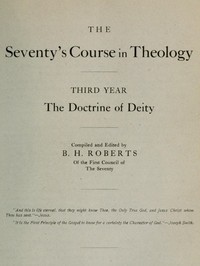
The Seventy's Course in Theology, Third Year: The Doctrine of Deity
Written by B. H. (Brigham Henry) Roberts
Chaptra reads alongside you — AI insights, chapter breakdowns and reader discussions for every book. Join free
About this book
Reading guide
Themes, characters and key ideas in The Seventy's Course in Theology, Third Year: The Doctrine of Deity, written by Chaptra AI.
- about 8 hours
- advanced
- Instructive
- Reverent
- Didactic
B. H. Roberts's "The Seventy's Course in Theology, Third Year: The Doctrine of Deity" serves as a foundational theological text within Mormonism, specifically designed for the instruction of priesthood holders in the early 20th century. This volume focuses intently on the character and attributes of God, building upon previous years of the course. Roberts frames the study of Deity as essential for faith, outlining a methodological approach that integrates scripture, discussion, tradition, and modern revelation. The work aims to provide a comprehensive framework for understanding God, preparing readers for deep theological engagement with core tenets of the faith.
“Understanding the character of God is fundamental to the very foundations of faith.”
Key themes
- The Nature of Deity
- This is the core theme of the book, focusing on understanding the character, attributes, and essence of God within the specific theological framework of Mormonism. It moves beyond simplistic definitions to explore a complex, anthropomorphic, and relational understanding of the Divine.
- Revelation and Tradition
- The book explores how knowledge of God is acquired, emphasizing a synthesis of ancient biblical traditions with modern revelation unique to Latter-day Saint belief. It posits that understanding Deity is a continuous process guided by both historical accounts and ongoing divine communication.
- Theological Education and Instruction
- This theme highlights the importance of structured learning and discussion in fostering deep spiritual understanding. The entire course is presented as a framework for both teaching and understanding, underscoring the value placed on intellectual and spiritual development within the priesthood.
Worth discussing
How does Roberts define the 'character' and 'attributes' of God, and what implications do these definitions have for personal faith?
Chapter-by-chapter breakdowns, character arcs and the full thematic analysis come with a free account.
Discussions
No one has started one yet
Questions this book opens up
No discussions yet
Be the first to start a discussion about this book!
Sign up to start the discussionReviews
No reviews yet
Be the first to review this book!