
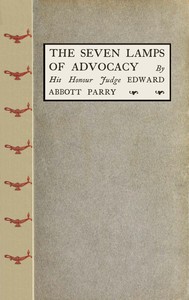
The Seven Lamps of Advocacy
Written by Edward Abbott Parry
Chaptra reads alongside you — AI insights, chapter breakdowns and reader discussions for every book. Join free
About this book
Reading guide
Themes, characters and key ideas in The Seven Lamps of Advocacy, written by Chaptra AI.
- about 8 hours
- advanced
- instructive
- thought-provoking
- formal
Sir Edward Abbott Parry's "The Seven Lamps of Advocacy" is a foundational text for aspiring and practicing legal professionals, meticulously outlining the indispensable virtues required for effective and ethical advocacy. Written in the early 20th century, the book structures its insights around seven core principles: honesty, courage, industry, wit, eloquence, judgment, and fellowship, each explored through historical anecdotes and the experiences of notable figures from the English Bar. Parry's work serves as both a practical guide and a philosophical treatise, emphasizing the moral and professional duties inherent in the pursuit of justice. It ultimately aims to inspire legal practitioners to uphold these timeless principles, fostering a legal community dedicated to excellence and integrity.
“Honesty is not merely the best policy, but the only policy for the advocate, for it is the foundation upon which all trust and credibility are built.”
Key themes
- Honesty and Integrity
- Parry establishes honesty as the foundational lamp, arguing that without it, all other virtues are compromised. This theme explores not just truth-telling but intellectual honesty, transparency, and the unwavering commitment to ethical conduct in all dealings with clients, courts, and colleagues. It is presented as the bedrock of trust and credibility for an advocate.
- Courage in Advocacy
- This theme highlights the necessity for advocates to possess moral and intellectual courage. It's not mere physical bravery but the fortitude to stand against popular opinion, challenge injustice, represent unpopular clients, or confront powerful adversaries. Courage enables the advocate to speak truth to power and uphold principles even when it is difficult or risky.
- The Art of Persuasion (Wit & Eloquence)
- These two lamps, often explored in conjunction, delve into the advocate's ability to communicate effectively and persuasively. Wit is presented as the quickness of mind, the ability to respond deftly and insightfully, often with humor, to sway opinion. Eloquence is the mastery of language, the art of structuring arguments, and delivering them with clarity, force, and emotional resonance to captivate and convince the audience (judge or jury).
Worth discussing
Are the 'Seven Lamps' still relevant in contemporary legal practice, particularly with evolving legal systems and societal norms?
Chapter-by-chapter breakdowns, character arcs and the full thematic analysis come with a free account.
Discussions
No one has started one yet
Questions this book opens up
No discussions yet
Be the first to start a discussion about this book!
Sign up to start the discussionReviews
No reviews yet
Be the first to review this book!